

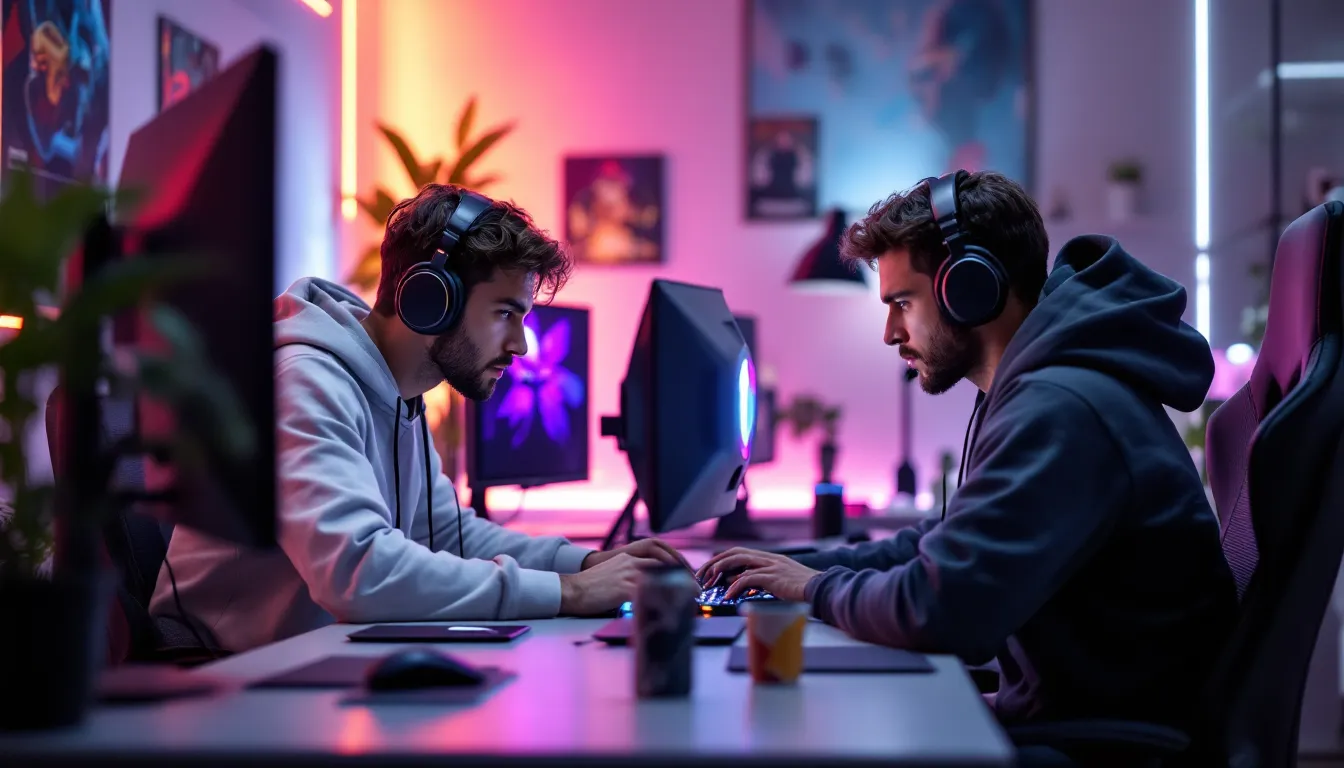

There’s something uniquely satisfying about gaming with a dedicated partner, someone who knows your playstyle, anticipates your moves, and shares the highs and lows of every match. Whether it’s clutching a 2v5 in a tactical shooter, building an empire together in a survival sandbox, or trash-talking through a fighting game session, two-player gaming creates a dynamic that solo play can’t replicate.
The landscape of co-op and competitive duo gaming has exploded in 2026, with developers prioritizing two-player experiences across every platform. From couch co-op revivals on console to asymmetric PC titles designed for duo synergy, there’s never been a better time to lock in with your gaming buddy. But making the most of 2 dudes gaming isn’t just about picking a title and jumping in, it requires the right game choices, proper setup, solid communication, and chemistry that only comes from shared sessions.
This guide breaks down everything needed to elevate duo gaming sessions: the genres that shine with two players, the best titles across PC, console, and mobile, hardware and communication setups that eliminate friction, strategies for building team coordination, and even how to turn gaming sessions into streamable content. Whether grinding ranked queues or casually exploring open worlds, here’s how to maximize every minute spent gaming with a partner.
Key Takeaways
- 2 dudes gaming creates stronger bonds and faster skill improvement than solo play because both partners share accountability, which builds unspoken communication and team chemistry over time.
- Top genres for duo sessions include tactical shooters (Valorant, Rainbow Six Siege), battle royales (Apex Legends, Warzone 3), survival games (Valheim, Grounded), and asymmetric co-op titles (It Takes Two, Portal 2) that leverage two-player synergy.
- Matching hardware, establishing clear roles (IGL vs. mechanical player), and developing concise callout systems prevent coordination mistakes and eliminate excuses during competitive matches.
- Successful 2 dudes gaming requires stable voice communication through Discord or platform-specific chat, consistent sessions to build chemistry, and honest post-match reviews to identify and fix repeating mistakes.
- Duo streams and content resonates with viewers through authentic banter and natural interaction, with variety streaming across genres reducing skill gap concerns and attracting diverse audiences.
- Avoid common pitfalls like playing too many games simultaneously, ignoring patch notes, grinding through fatigue, and refusing to celebrate progress—all factors that undermine long-term enjoyment and improvement.
What Makes 2 Dudes Gaming So Special?
The Brotherhood of Co-Op Gaming
Duo gaming builds a bond that transcends the screen. When two players commit to regular sessions, they develop unspoken communication, inside jokes born from clutch moments and catastrophic fails, and a shared history of progression. It’s not just about clearing content, it’s about experiencing challenges together and celebrating victories that feel earned because someone else witnessed them.
Unlike larger squads where individual contribution can get diluted, two-player setups put equal weight on both participants. Every decision matters. Every callout counts. There’s nowhere to hide when it’s just two people, which creates accountability that sharpens gameplay over time. The best duo partnerships develop a rhythm where one player’s weakness becomes the other’s strength, creating a whole greater than the sum of its parts.
This dynamic extends beyond competitive titles. Even in cooperative PvE experiences, the intimacy of a two-person team means shared resource management, coordinated exploration, and split-second decisions that require trust. When one player goes down, there’s exactly one person responsible for the rescue, and that pressure creates memorable moments that solo play or large-group gaming rarely delivers.
Why Two-Player Gaming Beats Solo Play
Solo gaming offers freedom and pacing control, but it lacks the accountability and social reinforcement that keeps players coming back. With a dedicated gaming partner, sessions become scheduled events rather than random time-fillers. That consistency builds skill faster than sporadic solo practice because there’s someone else invested in improvement.
The dopamine hit from a well-executed team play, a perfect assist, a synchronized push, a clutch revive, hits differently than any solo achievement. These moments create highlight reels in memory, the kind of plays that get recounted weeks later. Solo players experience satisfaction: duo players experience validation from someone who understands the difficulty of what just happened.
Two-player formats also solve the toxicity problem that plagues random matchmaking. Instead of rolling the dice on three strangers’ moods, skill levels, and communication styles, duo queuing guarantees at least 50% of the team is reliable. In competitive games, this advantage is massive, consistent duo partners climb ranked ladders faster than equally skilled solo players because they eliminate the variance that random teammates introduce.
Best Genres for 2 Dudes Gaming Sessions
Co-Op Shooters and Battle Royales
Tactical shooters thrive in duo format. Valorant, Rainbow Six Siege, and Counter-Strike 2 all reward coordinated site takes, crossfire setups, and trade kills that require trust in a partner’s positioning. Duo queuing in these titles provides enough firepower to execute strategies without the communication overhead of five-person squads.
Battle royales lean heavily into duo modes because they balance survival with aggression. Apex Legends duo mode (added permanently in Season 19) creates faster-paced matches where third-partying is easier but recovery is harder. Warzone 3 duos emphasize loadout synergy, one player running Ghost while the other carries a UAV creates information advantages that solo players can’t access. PUBG duos remain the purest tactical BR experience, where positioning and zone control matter more than mechanical aim.
Horde shooters like Helldivers 2 and Deep Rock Galactic scale difficulty for two players while maintaining the chaos that makes these games engaging. Two-player sessions feel more manageable than four-player mayhem but retain enough enemy density to require constant communication and resource sharing.
Survival and Sandbox Adventures
Survival games built for duo play avoid the loneliness of solo experiences and the resource competition of larger servers. Valheim progression feels perfectly paced for two players, one gathering while the other builds, splitting boss fights into manageable challenges, and exploring biomes with a safety net. Grounded (fully released September 2024) designed its entire campaign around 1-4 players, but duo sessions balance difficulty and resource distribution better than any other player count.
Palworld (v0.3.1 as of February 2026) turned base-building and creature collection into a duo-optimized loop where specialization matters. One player focusing on base automation while the other explores and captures Pals creates a satisfying division of labor. Raft remains a sleeper hit for two-player survival, where every expansion requires coordinated defense against shark attacks and resource management.
Sandbox creativity games like Minecraft and Terraria let duo partners tackle massive projects together. Building projects that would take weeks solo compress into weekend marathons when two players contribute. Boss progression in Terraria specifically scales well for two players, requiring gear coordination and role definition without becoming overwhelming.
Fighting Games and Competitive 1v1
Head-to-head fighting games create the most direct competition possible. Street Fighter 6 (currently in Year 3 content with Season 4 dropping May 2026) and Tekken 8 provide endless depth for duo partners who enjoy competitive improvement. Regular sessions against the same opponent expose habits, force adaptation, and build matchup knowledge faster than ranked matchmaking against randoms.
Tag team modes in Guilty Gear Strive and Dragon Ball FighterZ add a cooperative layer to traditional fighting game competition, where duo partners build teams designed to cover each other’s weaknesses. The meta-game of team composition becomes as important as execution, and coordinating assists requires the kind of communication that only regular partners develop.
Super Smash Bros. Ultimate doubles matches remain the most accessible competitive 2v2 experience in fighting games, with lower execution barriers than traditional fighters but equally deep team synergy requirements. Players who invest time learning combo extensions off partner setups and stage control in doubles develop a communication shorthand that translates to other cooperative games.
Puzzle and Strategy Games for Team Problem-Solving
Asymmetric puzzle games specifically designed for two players create experiences impossible to replicate solo. It Takes Two (Game of the Year 2021, still the gold standard in 2026) forces constant cooperation through mechanics that require both players’ simultaneous input. A Way Out and its successor Brothers: A Tale of Two Sons Remake demonstrate how narrative-driven puzzle solving benefits from two perspectives working together.
Portal 2 co-op campaign remains unmatched for spatial reasoning puzzles that require trust. Watching a partner perform their half of a four-portal solution while you execute yours creates satisfying “aha” moments that solo puzzle games can’t deliver. The recent Portal: Revolution mod (community-made, released January 2024) added dozens of new co-op chambers that veterans should revisit.
Strategy games like Divinity: Original Sin 2 and Baldur’s Gate 3 transform from solo RPGs into tactical masterpieces in two-player mode. Combat encounters balanced for four characters become intense when controlled by two players running two characters each, requiring strategic positioning and action economy management that feels closer to XCOM than traditional CRPGs.
Top 2 Dudes Gaming Titles Across All Platforms
PC Gaming Picks for Duo Sessions
Elden Ring co-op (Patch 1.12 as of March 2026) cleaned up most connectivity issues that plagued launch. Using the Tarnished’s Furled Finger for persistent co-op creates an experience where duo partners can tackle the entire open world together, splitting aggro on bosses and coordinating builds. The recent Colosseum update added 2v2 modes that reward teamwork over individual skill.
Lethal Company blew up in late 2023 and remains the best asymmetric horror co-op experience for two players who enjoy coordinated looting under pressure. One player navigating while the other manages inventory and watches for entities creates constant tension that four-player sessions dilute.
Deep Rock Galactic (Season 6 “Eternal Conquest” live as of January 2026) scales enemy density for two players perfectly. Running Scout/Engineer or Driller/Gunner duos creates clear role synergy where each class compensates for the other’s mobility or firepower weaknesses. Hazard 5 missions with two competent players feel more achievable than with four randoms.
Escape from Tarkov duo raids find the sweet spot between solo stealth and squad firepower. Two players can effectively clear hotspots like Dorms or Resort while maintaining enough mobility to avoid larger squads. The recent Tarkov Arena mode (released December 2025) added 2v2 competitive matches that emphasize gunfight fundamentals over the survival game’s economic meta.
Risk of Rain 2 remains the definitive duo roguelike. Item synergy between two players creates broken builds faster than solo runs, and revive mechanics keep runs alive through mistake recovery. The Devotion Update (August 2025) added duo-specific artifacts that modify difficulty scaling and loot distribution.
Console Co-Op Classics
Halo Infinite co-op campaign (finally stable after the Season 3 overhaul) delivers the classic Halo experience at its best with a partner. Legendary difficulty feels designed for two players splitting enemy attention, and vehicle sections shine when one player drives while the other mans the gun.
Gears of War: E-Day (launching September 2026 on Xbox Series X
|
S and PC) promises a return to the franchise’s cover-based co-op roots. Early previews suggest the campaign is specifically tuned for duo play, with flanking opportunities requiring coordination that larger squads trivialize.
Cuphead and Cuphead: The Delicious Last Course punish poor coordination but reward duo partners who learn boss patterns together. Two-player runs require callouts for parry opportunities and phase transitions, turning what could be chaotic into a synchronized dance.
A Way Out remains the best narrative co-op experience on console, where story beats specifically require both players’ simultaneous participation. The prison break structure naturally splits tasks in ways that make both players feel essential.
It Takes Two works on all platforms but shines on console where couch co-op is easiest to set up. The variety of mechanics across chapters means both players constantly learn new interactions rather than falling into rote execution.
Mobile Games You Can Play Side-by-Side
Brawl Stars duo showdown mode creates bite-sized competitive sessions perfect for mobile. Matches run 2-3 minutes, and the top-down shooter mechanics work better with touch controls than most mobile shooters attempting to replicate console experiences.
Stumble Guys duos mode (added December 2024) brings Fall Guys-style obstacle courses to mobile with partner respawn mechanics. One player qualifying carries their partner to the next round, creating comeuppance moments when the roles reverse.
Pokémon Unite ranked duos let partners coordinate lane assignments and objective timing through built-in communication wheels. The MOBA-lite mechanics are accessible enough for casual sessions but deep enough for competitive improvement over time.
Call of Duty Mobile Battle Royale duos maintain most of the core Warzone experience on mobile. Alcatraz map duos specifically create intense close-quarters fights where communication about enemy positions matters as much as aim.
Clash Royale 2v2 mode distributes elixir between partners, requiring strategic agreement on when to push lanes and defend. The pace forces quick communication, and matches resolve in under five minutes, making it perfect for short gaming sessions.
Setting Up the Perfect 2 Dudes Gaming Station
Local Co-Op vs. Online Play: Choosing Your Setup
Local co-op delivers immediate communication with zero latency but requires physical space and often limits game selection. Many modern titles dropped split-screen support entirely, Halo Infinite launched without it, Call of Duty abandoned it after Black Ops 3, and most competitive shooters never considered it. The trade-off is worth it for fighting games, party games, and specific co-op titles designed around couch play.
Split-screen when available comes with performance compromises. Most console games running local co-op drop from 60fps to 30fps or reduce resolution to maintain frame rate. Borderlands 3 on PS5 and Series X maintains 60fps in split-screen performance mode but cuts resolution to 1080p. Gears 5 handles it better with dynamic resolution scaling, rarely dropping below 1440p on Series X.
Online play opens the entire gaming library but introduces latency considerations. For competitive titles, both players need stable connections, one person lagging affects the duo’s performance in matchmaking. Asymmetric connection quality creates frustration when the player with better ping performs actions the other can’t replicate consistently. Strategies shared in detailed gaming setup tutorials cover optimizing network configurations for competitive play.
Essential Gear for Dual Gaming
Matching hardware eliminates excuses. When both players run identical setups, performance differences disappear, and gear becomes a non-factor in skill gaps. For PC gaming, matching refresh rate monitors matter more than resolution, a 144Hz player will feel handicapped when their partner is on 240Hz in fast-paced shooters where frame time advantages impact duels.
Controller vs. mouse and keyboard creates legitimate advantages in specific genres. For shooters, the mouse and keyboard player has superior precision: for fighting games and platformers, controller offers better movement control. Cross-input duos need to acknowledge these advantages rather than pretend they don’t exist. Apex Legends and Fortnite partially compensate with aim assist on controller, but the advantage reverses at longer ranges where mouse precision dominates.
Audio setup determines communication quality during intense moments. Separate gaming headsets with dedicated microphones beat sharing a single audio source. Open-back headphones work for casual sessions where hearing each other naturally is fine: closed-back isolation becomes necessary when both players need to focus without environmental distractions. Desk microphones (Blue Yeti, HyperX QuadCast) provide better voice quality than headset mics but create audio bleed if both players are in the same room.
Console considerations: two identical controllers prevent the asymmetry where one player gets the good controller. PlayStation 5 DualSense controllers have noticeable variance in stick tension and trigger resistance between manufacturing batches. Xbox Elite Series 2 controllers offer customization but cost $180, if one player has it and the other doesn’t, the difference is meaningful for competitive play.
Monitor positioning for side-by-side PC gaming requires either matching displays or accepting unequal viewing angles. Two 27-inch monitors on separate desks works better than trying to fit dual setups on a single desk surface. Console split-screen benefits from larger TVs, 55 inches minimum to give each player functional screen real estate without squinting.
Communication Tools and Voice Chat Setup
Discord remains the default for PC gaming communication, with noise suppression that outperforms in-game voice chat in almost every title. Krisp noise cancellation (built into Discord Nitro) eliminates keyboard clatter and background noise that plague open mic setups. Custom keybinds for mute/deafen let players toggle communication during intense moments without fumbling through menus.
Console platform-specific party chat, Xbox Party Chat and PlayStation Party Chat, offer better audio codecs than most games’ built-in voice. The trade-off is isolation from other teammates in matchmaking, which matters in competitive modes where communicating with all four or five players affects match outcomes. Duo partners running private chat sacrifice coordination with randoms, but gain clearer communication with each other.
TeamSpeak and Mumble are legacy options with lower latency than Discord, favored by competitive teams where every millisecond matters. The setup complexity doesn’t justify the marginal improvement for casual duo sessions, but serious ranked grinders notice the difference in fast-paced games where callouts need to happen before in-game actions complete.
Noise gate configuration prevents voice activation from triggering on breathing or ambient sound. Setting the activation threshold requires testing, too sensitive triggers on everything: too high misses urgent callouts. Most communication apps default to -40dB activation, but mechanical keyboard users need -30dB to prevent key presses from triggering voice.
Push-to-talk versus voice activation preference splits along game genre. Tactical shooters benefit from PTT to prevent accidental audio cues (“behind you.” alerting enemies in proximity chat): cooperative PvE games work better with voice activation so hands stay on movement and ability keys during combat.
Mobile gaming communication requires external apps since most mobile games lack robust voice chat. Discord mobile works but drains battery faster. Console companion apps (Xbox app, PlayStation app) let mobile players join party chat from phone but introduce awkward switching between game and chat app.
Cross-platform voice chat remains inconsistent. Fortnite, Call of Duty, and Apex Legends handle it well with unified voice systems: platform-exclusive titles require workarounds. Connecting console players with PC partners through Discord mobile on phone while gaming on console creates functional but inelegant solutions until developers prioritize native cross-platform voice.
Building Chemistry: Tips for Better Team Coordination
Establishing Roles and Playstyles
Defining responsibilities before sessions prevents in-match confusion. Competitive shooters benefit from IGL (in-game leader) designation, one player calls rotations, the other executes. This doesn’t mean one player is better: it means one voice makes strategic decisions while the other focuses on mechanics. Switching roles between sessions develops well-rounded gameplay but maintains clarity during matches.
Complementary playstyles create stronger duos than mirrored approaches. Pairing an aggressive entry fragger with a supportive anchor player in tactical shooters creates natural synergy, one creates space, the other holds it. In MOBAs and hero shooters, role specialization (DPS + Support, Tank + Healer) ensures team composition flexibility in matchmaking.
Survival games need resource management agreements. Establishing who builds, who gathers, who explores prevents redundant effort and ensures base progression. Valheim duos work best when one player focuses on infrastructure (portals, workbenches, storage) while the other scouts biomes and gathers rare materials. Rotating these roles prevents burnout from repetitive tasks.
Fighting game partners need to calibrate skill expectations. If one player significantly outperforms the other, sessions become teaching moments rather than competitive matches. Using handicaps (self-imposed character restrictions, lower-tier picks) or focusing on team modes instead of head-to-head preserves the fun without creating frustration.
Communication Strategies That Win Games
Concise callouts beat verbose explanations during combat. “Two cat” is better than “There are two enemies pushing through the catwalk” in the time it takes to process and react. Developing shorthand for common callouts (map positions, enemy counts, health status) speeds up information transfer when milliseconds matter.
Calling out what you’re doing prevents duplication of effort. “I’m reloading” tells your partner to cover. “I’m planting” indicates they should watch flanks. “I’m low” signals they need to take aggression. These micro-callouts seem obvious but get forgotten in the heat of combat, leading to both players reloading simultaneously or both peeking the same angle.
Positive reinforcement during sessions maintains morale through losing streaks. Acknowledging good plays, “nice shot,” “good rotate”, keeps both players engaged even when match outcomes go poorly. Toxicity between duo partners destroys chemistry faster than any skill gap.
Post-match review identifies fixable mistakes. Spending 60 seconds after a loss discussing what went wrong (“we both pushed instead of trading,” “we needed to rotate earlier”) prevents repeating errors. Many competitive resources and esports coverage analyze professional duo coordination patterns worth studying.
Handling Disagreements and Competitive Tension
Skill gaps create natural friction when one player consistently outperforms the other. The stronger player gets frustrated carrying: the weaker player feels like dead weight. Addressing this directly, “I’ll focus on teaching this session” or “let’s play unranked to work on fundamentals”, prevents passive-aggressive comments mid-match.
Disagreements about strategy should resolve before queuing the next match. If one player wants to rush every fight and the other prefers playing edges, neither approach works when executed inconsistently. Testing each strategy for an agreed number of matches (“we’ll play aggressive for five games, then defensive for five”) provides data on what works better.
Knowing when to take breaks prevents burnout. Losing three matches in a row kills mental stamina: continuing to queue produces worse results. Setting a rule (“three losses and we switch games”) maintains enjoyment and prevents spiraling into frustration.
Blaming external factors (lag, teammates, RNG) occasionally relieves pressure but becomes toxic when constant. Honest self-assessment, “I whiffed that spray,” “I shouldn’t have peeked”, creates accountability that improves performance. Duo partners who can’t accept responsibility for mistakes plateau quickly.
Streaming and Content Creation as 2 Dudes
Why Duo Content Resonates with Viewers
Duo streams provide built-in entertainment through natural banter and chemistry that solo streamers manufacture through chat interaction. Viewers watch personalities interact as much as they watch gameplay. Successful duo streams (TimTheTatman and DrLupo era, Nadeshot and 100T collabs) demonstrate that authentic friendship creates content nobody can script.
Competitive duo content documents improvement arcs viewers can follow. Climbing ranked ladders together, learning new games as a pair, or mastering specific strategies creates narrative progression that episodic streams reinforce. Each session builds on previous ones, rewarding returning viewers with context casual viewers miss.
Duo variety streaming mitigates skill gap concerns. When one player excels at shooters and the other at strategy games, content naturally rotates through different genres. This broader appeal attracts diverse audiences instead of pigeonholing the channel into a single game.
Chaos compilations from duo sessions generate viral clips. Coordinated plays look scripted: catastrophic failures feel authentic. The tension between attempting serious competitive play and descending into comedic disaster creates highlight moments that solo content struggles to produce organically. Many channels focused on gaming culture and entertainment feature these authentic duo interactions.
Platform and Equipment Recommendations
Twitch remains dominant for live gaming content in 2026, but YouTube Gaming gained ground with better discoverability for new streamers. Kick carved a niche for less restrictive content policies but smaller audiences. Duo streamers benefit from multistreaming tools (Restream, StreamElements) to broadcast simultaneously across platforms, maximizing reach during growth phases.
Capture card requirements: if both players are on separate PCs, individual capture setups work. For console + PC duos, the console player needs a capture card (Elgato HD60 X, AVerMedia Live Gamer Ultra 2.1) to route gameplay to streaming PC. Split-screen couch co-op streams need only a single capture setup pointed at the shared screen.
Audio mixing separates amateur from professional duo streams. Each player needs individual audio tracks, two microphone inputs mixed in OBS Studio or Streamlabs Desktop, so volumes can balance post-production or live. One loud player drowning out their quieter partner kills watchability. Investing in a basic mixer (GoXLR Mini, Behringer Xenyx) gives real-time control over individual audio levels.
Overlay design for duo content needs both players’ camera feeds without cluttering gameplay. Side-by-side webcams work for slower-paced games: picture-in-picture single camera showing both players suits competitive titles where screen real estate matters. Chat positioning, alerts, and event notifications need to avoid critical UI elements in whatever game is being played.
Video export for YouTube highlights: most successful duo content comes from condensing 4-6 hour streams into 10-20 minute highlight videos. Learning basic editing (DaVinci Resolve is free, Adobe Premiere for professionals) separates channels that grow from those that stagnate. Viewers won’t watch full VODs: they’ll consume edited content that showcases the best moments.
Common Mistakes to Avoid in 2 Dudes Gaming
Playing too many games simultaneously prevents mastery of any single title. Duo partners jumping between five different games each session never develop the deep knowledge required for high-level play. Committing to one primary game with occasional variety sessions builds expertise while preventing burnout.
Ignoring meta shifts and patch notes creates disadvantages in competitive titles. What worked last season might be nerfed into irrelevance. Duo partners who don’t read patch notes or adjust strategies find themselves running outdated tactics that better-informed opponents exploit. Setting aside time each patch to test changes and adapt strategies maintains competitive edge.
Over-focusing on rank at the expense of enjoyment turns gaming into a second job. If sessions consistently end in frustration because of LP gains or SR losses, the competitive drive has become unhealthy. Duo gaming exists to enhance enjoyment, not replace it with stress.
Neglecting hardware maintenance creates avoidable problems. Controllers develop stick drift, keyboards accumulate debris under keys, mice develop double-clicking issues. These hardware problems cause deaths and lost matches that erode confidence. Regular cleaning and replacement of worn equipment eliminates a variable that affects performance.
Refusing to learn from better players limits improvement. Watching professional duo players, s1mple and electronic in CS2, HisWattson and Apryze in Apex, high-ranked Valorant duos, reveals positioning, timing, and communication patterns that casual players miss. VOD review of both personal gameplay and professional matches accelerates learning.
Playing through fatigue produces diminishing returns. After three hours of intense competitive gaming, reaction time and decision-making deteriorate. Continuing to queue “for one more match” extends sessions into negative practice where bad habits form. Recognizing when performance drops and calling sessions maintains quality over quantity.
Not celebrating wins or milestones prevents appreciating progress. Hitting a new rank, completing a difficult achievement, or mastering a challenging combo deserves acknowledgment. Duo partners who constantly focus on the next goal without appreciating current accomplishments lose sight of why gaming together is enjoyable in the first place.
Conclusion
Gaming with a dedicated partner transforms individual sessions into shared experiences that create lasting memories and accelerate skill development. The right game choices, proper communication setup, and honest chemistry-building separate casual duo queuing from genuinely effective team play. Whether grinding competitive ranks, exploring survival worlds, or creating content together, the investment in coordination and understanding pays dividends in both performance and enjoyment.
The gaming landscape in 2026 offers unprecedented options for two-player experiences across every platform and genre. From tactical shooters requiring precise communication to cooperative adventures built around partnership mechanics, there’s never been more variety for duo sessions. The key is matching game selection to playstyle compatibility, establishing clear roles and expectations, and maintaining the balance between competitive drive and genuine fun that makes gaming with a partner worthwhile.
Technology and tools continue to remove barriers to quality duo gaming, cross-platform play, robust voice chat, accessible streaming equipment, and matchmaking systems designed around premade pairs. What remains constant is the need for chemistry, communication, and commitment to improvement that separates forgettable sessions from the kind of gaming memories that last years. Lock in with a partner who shares the competitive fire or cooperative spirit, build the skills together, and the results will speak for themselves.