

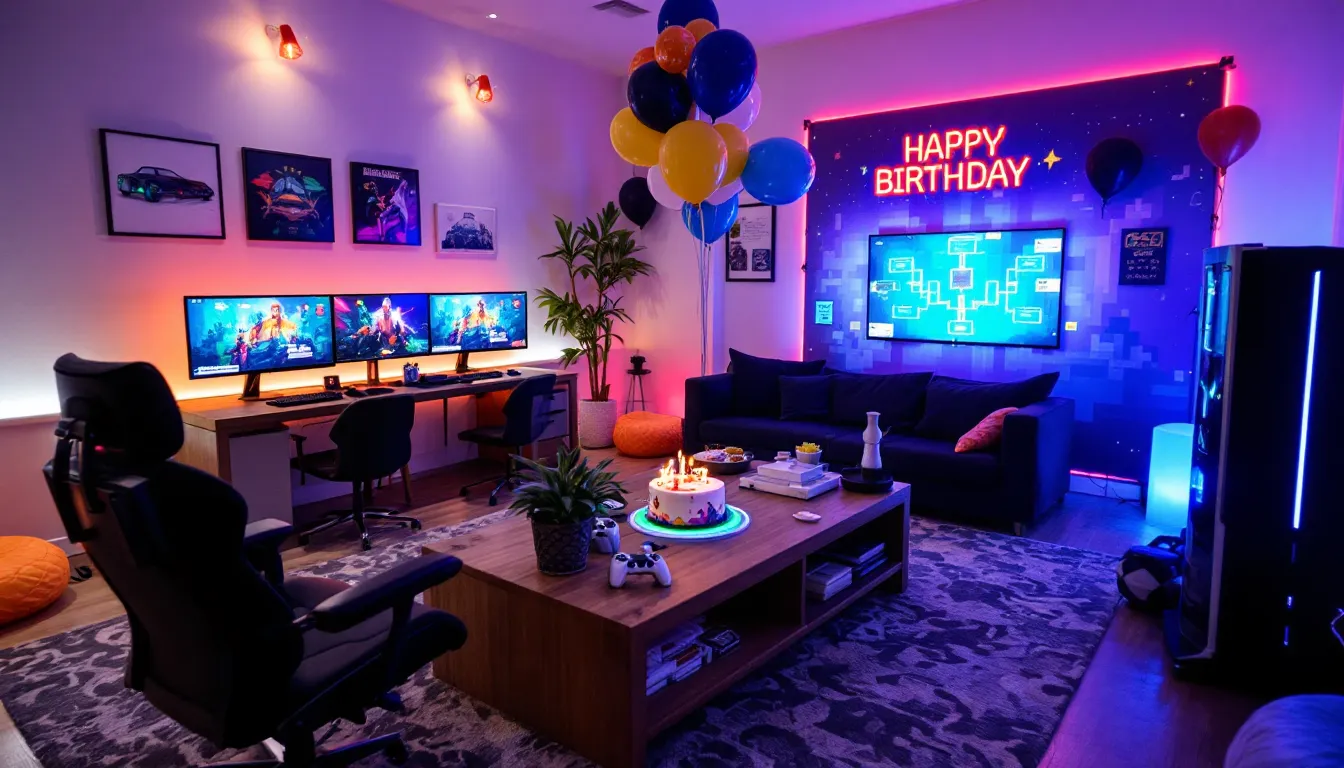

Planning a birthday party in 2026? Skip the generic themes and boring cake-and-balloons routine. If the guest of honor lives for late-night raids, speedruns, or chasing victory royales, a gaming-themed birthday party is the ultimate win. Whether they’re obsessed with battle royales, cozy farming sims, or retro platformers, gaming parties offer limitless customization and a guaranteed good time for players of all skill levels.
This guide covers everything from venue selection and tournament brackets to the best finger foods that won’t grease up controllers. No filler, no fluff, just practical, tested ideas that’ll make your gaming party the highlight of the year.
Key Takeaways
- Gaming birthday party ideas work across all age groups by combining built-in engagement with customizable themes that match the guest of honor’s actual gaming interests.
- Home setups, gaming cafes, and VR arcades each offer distinct advantages—choose based on your budget ($200-$500 for home parties, $25-$60 per person for venues) and comfort level with tech setup.
- Tournament structure is essential for teen and adult parties; use double-elimination brackets for fighting games, Grand Prix formats for racing games, and rotating stations to keep energy high.
- Mix screen time with non-digital activities like tabletop games, physical challenges, or trivia contests to prevent burnout during extended gaming sessions.
- Themed food presentation and controller-friendly snacks elevate the experience; rename standard snacks (“XP Boost,” “Shield Cells”), avoid greasy foods, and include wet wipes at every gaming station.
- Test all equipment 24 hours before the party, assign a tech-savvy troubleshooter, and tailor game selection to match the guest of honor’s preferences rather than generic gaming assumptions.
Why Gaming-Themed Birthday Parties Are the Perfect Choice
Gaming parties are having a moment, and it’s easy to see why. Unlike passive entertainment, gaming creates instant engagement and genuine competition, everyone’s invested, everyone’s talking, and everyone’s having a blast.
The flexibility is unmatched. Love Minecraft? Build a blocky wonderland. Obsessed with fighting games? Set up a bracket and crown a champion. Into cozy multiplayer? Host a Stardew Valley co-op marathon. The theme adapts to the birthday person’s actual interests instead of forcing them into a one-size-fits-all concept.
Gaming parties also scale beautifully. A small group can jump into story-driven co-op experiences, while larger crowds thrive on tournament-style competitions and rotating game stations. Plus, the social aspect is built-in, gaming is inherently interactive, so awkward small talk fades fast once controllers are in hand.
Finally, gaming parties work for nearly any age group. Kids love the flashy visuals and accessible titles, teens appreciate the competitive edge, and adults get nostalgic over retro games or enjoy modern esports-style setups. It’s one of the few party themes that genuinely crosses generational lines without feeling forced.
Planning Your Gaming Party: Essential First Steps
Choosing the Right Gaming Theme for Your Party
Nailing the theme early makes every other decision easier. Start by identifying the guest of honor’s favorite games or genres, don’t guess, just ask or check their Steam library, console activity, or Discord status.
Single-game themes work best when the title has strong visual identity and broad appeal. Think Fortnite, Minecraft, Super Mario, Zelda, or Pokemon. These franchises offer instantly recognizable aesthetics and plenty of merch options for decorations and party favors.
Genre-based themes offer more flexibility. A “retro arcade” theme lets you mix Pac-Man, Donkey Kong, and Street Fighter. A “battle royale” party can blend Fortnite, Apex Legends, and PUBG. An “esports tournament” theme creates a competitive vibe without locking into one title.
Consider your guest list’s gaming preferences too. If half the attendees are console players and half are PC gamers, choose a theme that accommodates both platforms. Cross-play titles like Rocket League, Fall Guys, or Among Us are perfect for mixed crowds.
Setting a Budget and Timeline
Gaming parties can range from budget-friendly home setups to premium esports lounge experiences. Lock down your budget first, it’ll dictate venue options, food choices, and whether you’re renting extra equipment or working with what you’ve got.
For home parties, expect to spend $200-$500 for 10-15 guests, covering decorations, food, and maybe a few new controllers or accessories. Venue rentals at gaming cafes typically run $25-$50 per person for 2-3 hours, including equipment and staff. VR arcades charge similar rates but offer unique experiences that justify the premium.
Timeline matters more than you’d think. Book gaming venues 4-6 weeks in advance, especially for weekend slots. Order custom decorations or printed invitations 3-4 weeks out. Plan the tournament bracket and game rotation at least two weeks before the party, this prevents day-of chaos when everyone’s asking “what are we playing?”
Build in buffer time for tech setup. Controllers need charging, game updates need downloading, and internet connections need testing. Plan to have everything ready at least an hour before guests arrive. Nothing kills momentum like waiting for a 40GB patch to install while everyone stands around.
Epic Gaming Party Venue Ideas
Home Setup: Transform Your Space Into a Gaming Arena
Home parties offer maximum control and the best bang for your buck. Clear out the living room or basement, rearrange furniture to create defined gaming zones, and suddenly you’ve got a custom arena.
Set up multiple stations to prevent bottlenecks. One TV for console gaming, a PC setup for keyboard-and-mouse titles, and a mobile gaming corner for casual players. If you’re short on screens, projectors are surprisingly affordable rentals ($50-$100) and deliver that esports-venue feel.
Lighting makes a huge difference. Swap regular bulbs for RGB smart lights or LED strips, they’re cheap, easy to install, and instantly level up the atmosphere. Sync them to your gaming theme’s color palette: green and black for Xbox, blue for PlayStation, red for Nintendo.
Sound management is critical. Use headsets for competitive games to avoid audio chaos, but let party games like Mario Kart or Smash Bros blast through speakers for maximum hype. Keep a Bluetooth speaker handy for background music during food breaks.
Gaming Cafes and Esports Lounges
Gaming cafes and esports lounges are purpose-built for exactly this scenario. You get high-end gaming PCs or consoles, comfortable seating, professional-grade internet, and staff who handle tech issues.
Most venues offer party packages that include reserved seating, dedicated servers, and sometimes food/drink options. Prices vary wildly, urban centers like Los Angeles or New York charge premium rates, while smaller cities offer better value. Call ahead to ask about birthday specials: many venues throw in free gaming time for the birthday person.
These spaces work best for teens and adults who appreciate high-performance hardware and want to play demanding titles at max settings. The social environment is perfect for competitive gamers who thrive on that LAN party energy.
Downsides? Less customization for decorations, fixed time slots, and you’re sharing space with other customers unless you book a private room. Read reviews carefully, some gaming cafes have outdated equipment or spotty WiFi even though the premium pricing.
Virtual Reality Arcades
VR arcades are the premium choice for unforgettable experiences. Guests get access to high-end headsets like Meta Quest 3, PlayStation VR2, or Valve Index setups without the $500+ price tag of ownership.
The experience factor is unmatched. First-timers react with genuine awe, and even veteran gamers appreciate the hardware quality and curated game selection. Popular party titles include Beat Saber, Superhot VR, Keep Talking and Nobody Explodes, and multiplayer shooters like Contractors or Population: One.
Most VR arcades offer party packages with private rooms, dedicated attendants, and flexible time blocks. Budget $30-$60 per person for 1-2 hours. Some venues include party rooms for cake and presents between VR sessions.
Fair warning: VR has a learning curve and motion sickness risk. Not everyone will want extended playtime, so plan a mix of VR and traditional gaming or other activities. Also, hygiene matters, ask about their headset cleaning protocols between uses.
Invitations That Set the Tone
Invitations are your first chance to build hype. Skip the generic party store cards, go digital or custom.
Digital invitations work perfectly for gaming parties. Use platforms like Evite or Canva to create themed designs featuring game logos, pixel art, or esports aesthetics. Include essential details: date, time, location, and whether guests should bring controllers or headsets.
For a personal touch, design invitations that mimic in-game elements. A Fortnite-themed invitation could look like a Battle Pass page. A Minecraft invite could use the game’s crafting table interface. A retro party might feature an 8-bit arcade cabinet with party details displayed as a high score screen.
Discord invites are clutch for teen and adult parties. Create a temporary server, send out invite links, and use it for RSVP tracking, pre-party hype, and sharing tournament brackets. It doubles as a communication hub on party day for letting latecomers know which game rotation is active.
Include RSVP deadlines so you can finalize food orders and equipment needs. Ask about dietary restrictions, controller preferences (some people refuse to play on anything but their own gear), and game suggestions. This intel helps you curate the perfect playlist and avoid bringing someone’s least-favorite title.
Creative Gaming Party Decorations
Gaming-Inspired Color Schemes and Backdrops
Color schemes set the visual foundation. Console-specific parties can lean into brand colors: PlayStation blue and white, Xbox green and black, or Nintendo red and white. Multi-platform parties work best with neon accent colors, cyan, magenta, yellow, and green, that scream arcade energy.
Backdrops make killer photo ops. Print oversized posters of game covers, character art, or iconic in-game locations. Vinyl backdrops featuring pixelated landscapes or futuristic cityscapes cost $30-$60 online and instantly transform blank walls.
LED light strips are non-negotiable. Line them along walls, under tables, or behind TVs for that RGB glow every gaming setup needs. Smart bulbs let you change colors throughout the party, use cool tones during competitive matches, warmer colors during food breaks.
Balloons work if you commit to the bit. Get custom-printed balloons featuring game logos or characters. Foil balloons shaped like controllers, pixel hearts, or game-specific items (Minecraft pickaxes, Mario mushrooms) add legitimacy. Skip generic solid-color balloons unless they perfectly match your theme.
DIY Decoration Ideas for Budget-Conscious Gamers
DIY decorations slash costs while adding personal touches. Print pixel art characters on cardstock and mount them on foam board for standees. Create paper chains in your theme’s colors. Design custom banners with phrases like “GAME OVER [NAME]’S AGE” or “LEVEL [AGE] UNLOCKED.”
Cardboard boxes become props with minimal effort. Paint them to look like item crates from games like Overwatch or Fortnite. Stack them as decoration or use them to hold party favors. Add question marks for mystery boxes or draw health packs for a battle royale theme.
Controller centerpieces are easy wins. Group old or replica controllers around LED candles or small plants. Scatter game-related trinkets, dice, playing cards, vintage cartridges, across tables.
Food labels get a gaming makeover with simple design work. Rename snacks to match your theme: “HP Potions” for drinks, “Shield Cells” for chips, “Loot Drops” for candy. Print labels on sticker paper or cardstock stands. Modern party planning emphasizes creating gaming highlights through thoughtful decoration details that guests remember long after the event ends.
Gaming Tournament and Competition Ideas
Console Gaming Tournaments
Console tournaments are the backbone of most gaming parties. Pick games with quick matches and clear winners, nothing kills energy like a 45-minute League of Legends match when eight people are waiting for their turn.
Fighting games are tournament gold. Super Smash Bros. Ultimate, Street Fighter 6, Tekken 8, and Mortal Kombat 1 all offer fast rounds and built-in competitive modes. Set up a double-elimination bracket using free tools like Challonge or Battlefy. Best-of-three matches keep things moving.
Racing games work beautifully for larger groups. Mario Kart 8 Deluxe, Forza Horizon 5, or F1 24 support Grand Prix formats where everyone races simultaneously across multiple tracks. Points accumulate across races, creating natural rivalry and comeback potential.
Sports games are accessible even for non-gamers. FIFA 24, NBA 2K24, or Madden 24 let guests pick their favorite teams and jump in. Keep matches to 5-minute quarters to maintain pace.
Party games like Fall Guys, Gang Beasts, or Overcooked 2 prioritize chaos over skill, making them perfect for mixed-skill groups. Crown the player with the most round wins after a set number of games.
PC Gaming Competitions
PC tournaments suit more hardcore crowds but require careful game selection. Not everyone has equal keyboard-and-mouse proficiency, so consider accessibility.
FPS games dominate PC competitions. Counter-Strike 2 is the gold standard for competitive shooters, but demands serious skill. Valorant offers a gentler learning curve while maintaining tactical depth. For pure chaos, Team Fortress 2 or Overwatch 2 keep things light.
MOBA tournaments only work if your guests actively play the genre, don’t force League of Legends on MOBA newbies. Instead, try Heroes of the Storm for its simplified mechanics or set up custom Dota 2 lobbies with fun modifiers.
Battle royale formats create natural tension. Fortnite, Apex Legends, or PUBG let you run multiple rounds, awarding points for kills and placement. Total the scores after five matches to determine the champion.
RTS games like StarCraft II or Age of Empires IV work for strategy-minded groups but require longer match times. Use 1v1 formats and prepare snacks for spectators.
Mobile Gaming Challenges
Mobile gaming gets unfairly dismissed, but it’s perfect for keeping everyone engaged during downtime or accommodating guests without console/PC skills.
Among Us needs no introduction. Multiple rounds with rotating roles create hilarious accusations and genuine detective work. Requires 4-10 players on the same WiFi network.
Clash Royale tournaments work surprisingly well. Use the game’s built-in tournament feature to create private matches. Quick 3-minute battles and simple mechanics make it accessible.
PUBG Mobile or Call of Duty Mobile run smoother than you’d expect on mid-range phones. Set up custom rooms for private battle royale matches. Pair this with screen-mirroring to a TV for spectator viewing.
Mario Kart Tour, Pokémon Unite, or Brawl Stars offer pick-up-and-play competition. These titles shine during transitions, while waiting for pizza delivery or between console tournament rounds.
Retro Gaming Stations and Nostalgic Fun
Retro stations are party MVPs. They attract curious newcomers, give burned-out competitors a break, and spark conversations among older gamers.
Set up a dedicated retro corner with classic consoles: NES, SNES, Sega Genesis, N64, or original PlayStation. If you don’t own vintage hardware, emulation handhelds like the Anbernic RG35XX or Retroid Pocket offer thousands of games in one device.
Arcade cabinets or arcade sticks connected to PCs running MAME create authentic arcade experiences. Load up Pac-Man, Street Fighter II, Metal Slug, or Galaga for instant nostalgia.
High score challenges work perfectly for retro games. Post a leaderboard and let guests attempt to dethrone each other throughout the party. Simple games with clear scoring, Donkey Kong, Tetris, Frogger, encourage repeated attempts without requiring long time commitments.
Speedrun stations add competitive depth. Challenge guests to complete Super Mario Bros. World 1-1 as fast as possible, or race through Sonic the Hedgehog Green Hill Zone. Use a visible timer and track attempts on a whiteboard.
Non-Digital Gaming Activities to Balance the Fun
Pure screen time for 3-4 hours straight leads to burnout. Mix in non-digital gaming activities that maintain the theme while giving eyes and thumbs a rest.
Tabletop games bridge the gap perfectly. Exploding Kittens, Unstable Unicorns, or Sushi Go offer quick rounds and minimal rules explanation. For longer commitment, Catan, Ticket to Ride, or Codenames create strategic depth that appeals to gamers’ analytical minds.
Board games with gaming themes feel natural. Boss Monster casts players as video game villains building dungeons. Horrified or Pandemic deliver co-op experiences reminiscent of multiplayer raids. King of Tokyo channels fighting game energy into dice-rolling chaos.
Card games like Magic: The Gathering or Pokémon TCG work if your crowd already plays. Set up casual matches with preconstructed decks so everyone starts equal. For non-TCG players, Uno or Phase 10 provide mindless fun between intense gaming sessions.
Physical challenges with gaming twists get people moving. Create a real-life Mario Kart course using cardboard boxes as obstacles. Design a Fortnite-inspired scavenger hunt where teams collect “loot” around the venue. Host Just Dance or Beat Saber competitions that blend physical activity with rhythm gaming.
Trivia contests test gaming knowledge. Prepare questions across difficulty levels: easy questions about mainstream titles, medium questions about gaming history, and hard questions about obscure mechanics or developer trivia. Gaming culture and competitive elements naturally create memorable highlights that friends discuss for weeks after the party ends.
Food and Drink Ideas for Gaming Parties
Gaming-Themed Snacks and Treats
Themed food adds personality without requiring culinary school expertise. The key is clever presentation and branding.
Rename standard snacks to match your theme. Popcorn becomes “XP Boost Clusters” or “Energy Pellets.” Gummy worms transform into “Controller Cables.” Goldfish crackers are suddenly “Loot Fish.” Print small labels or tent cards with these names, it’s a tiny detail that guests notice and appreciate.
Color-coordinate food with your theme. Blue punch and frosted cookies for PlayStation parties. Green Jell-O cups with gummy worms for Minecraft. Neon-colored candies (Skittles, Airheads, sour belts) for general arcade vibes.
Create potion stations with various drinks in clear dispensers. Label them as health potions, mana potions, or shield potions. Use food coloring to match in-game item colors, red for health, blue for shields, green for stamina. Dry ice adds dramatic fog effects for photos but requires careful handling.
Candy bars rebranded with custom wrappers are surprisingly easy. Download templates online, print on adhesive paper, and wrap them around standard candy bars. “Shield Bar,” “Ammo Pack,” or “Critical Hit” labels turn boring snacks into party elements.
Easy Finger Foods That Won’t Interfere With Controllers
Greasy hands destroy controllers and keyboards. Choose foods that minimize mess without sacrificing flavor.
Pizza is the obvious choice but execute it right. Cut into smaller squares rather than large slices, easier to handle one-handed between matches. Provide plenty of napkins at every station. Consider personal pizzas so guests can eat at their own pace.
Chicken wings are beloved but risky. Offer boneless wings or use serving picks so fingers never touch the meat. Place wet wipes everywhere. Alternatively, skip wings entirely and go with chicken tenders or popcorn chicken, less mess, same satisfaction.
Vegetable trays with individual dip cups keep things clean. Cherry tomatoes, baby carrots, celery sticks, and bell pepper strips are all finger-friendly. Ranch, hummus, or spinach dip in separate small containers prevents double-dipping.
Charcuterie boards (or as gamers prefer, “loot boards”) offer variety: sliced cheese cubes, pepperoni, crackers, pretzels, nuts, and grapes. Everything’s bite-sized and manageable with one hand.
Candy and snack mix stations let guests create custom combinations in individual cups. Provide M&Ms, pretzels, Goldfish, Chex Mix, popcorn, and gummy candies. Everyone builds their perfect fuel without touching communal bowls.
Creative Gaming Birthday Cakes
The birthday cake is your centerpiece moment, make it count.
Themed sheet cakes are the budget-friendly option. Most grocery bakeries can print edible images of game logos, characters, or screenshots onto frosting. Provide a high-resolution image file and they’ll handle the rest for $30-$50.
Custom fondant cakes from specialty bakeries deliver showstopping results. Think 3D controller cakes, stacked game cartridges, or character figurines. Expect to pay $75-$200+ depending on complexity. Book 2-3 weeks in advance and bring reference images.
Cupcake towers offer portion control and visual impact. Frost cupcakes in theme colors and top with custom toppers: tiny controller prints, pixel heart picks, or game logo cutouts. Arrange them in a tower stand for that tiered cake look.
DIY cakes work if you’ve got basic decorating skills. Bake a rectangular cake and frost it to resemble a Game Boy, Nintendo Switch, or smartphone screen. Use colored frosting tubes to add details. Candy pieces become buttons, M&Ms, Skittles, or fondant circles work perfectly.
Cake alternatives matter for crowds with dietary restrictions. Offer cupcakes, brownies, or cookies alongside the main cake. Clearly label anything gluten-free, nut-free, or vegan so guests with allergies can participate without asking awkward questions.
Party Favors and Prizes That Gamers Will Actually Love
Skip the cheap plastic junk. Gamers want functional items or genuine collectibles, not another toy that breaks before they get home.
Physical prizes for tournament winners should feel valuable. Gaming mice, mechanical keyboards, quality headsets, or external SSDs make excellent top prizes. Mid-tier prizes could include controller skins, mouse pads, RGB lighting accessories, or gaming-themed apparel.
Gift cards are universally appreciated. Steam cards, PlayStation Store cards, Xbox gift cards, or Nintendo eShop cards let winners choose their own rewards. $25-$50 cards for first place, $10-$15 for runners-up.
Game codes work perfectly as party favors. Watch for bundle deals or sales on indie titles. Send everyone home with a $5-$15 game they can download immediately. Coordinate with guests to avoid gifting games they already own.
Custom swag adds personalization. Design and order custom t-shirts, hoodies, or hats featuring your party’s theme or inside jokes. Sites like CustomInk or Printful make small-batch orders affordable. Enamel pins, stickers, or keychains with game themes are cheaper alternatives.
Collectibles hit different. Funko Pops of game characters are safe bets. Blind box figures from franchises like Pokémon or Overwatch add mystery. Trading cards, Pokémon, Magic: The Gathering, or Yu-Gi-Oh. booster packs, appeal to collectors.
Snack boxes or candy bags make solid consolation prizes. Fill small bags with gaming-themed candy (Pac-Man candy tins, Pokémon gummies) or premium snacks like Japanese Kit-Kats or imported chips. Tie them shut with ribbon matching your color scheme.
DIY favor bags work on tight budgets. Include: a few themed stickers, a small bag of candy, a thank-you card, and maybe a cheap pair of earbuds or phone pop socket. Presentation matters, use bags or boxes in theme colors rather than plain brown paper.
Music and Entertainment Beyond Gaming
Background music matters more than you’d think. Silence between matches feels awkward, and random Spotify playlists kill carefully crafted vibes.
Curate game soundtracks that match your theme. Spotify and YouTube have countless game OST playlists. The Halo theme, Minecraft ambient music, DOOM Eternal’s soundtrack, or Persona 5’s jazz-fusion tracks all set distinct moods. Keep volume low during active gaming, turn it up during food breaks.
Chiptune and electronic music maintains gaming energy without lyrics that distract from conversation. Artists like Anamanaguchi, Disasterpeace, or C418 deliver perfect background vibes. Synthwave artists (Carpenter Brut, Perturbator, Dance with the Dead) channel retro arcade aesthetics.
Stream overlays add production value if you’re broadcasting the party. Set up OBS to capture gameplay with custom overlays showing tournament brackets, player names, and score tracking. Stream to a private YouTube or Twitch link so remote friends can watch.
Commentary stations let spectators get involved. Set up a designated “shoutcaster” spot with a microphone where guests can provide play-by-play during tournament matches. It’s hilarious when done by amateurs and adds energy to the room.
Photo booths create lasting memories. Set up a backdrop with props: fake controllers, oversized pixel art items, cardboard weapons from games, or character masks. Use a tripod-mounted phone or camera with a remote shutter. Guests will take dozens of photos naturally throughout the party. Console modifications, troubleshooting guides, and party setup walkthroughs often appear in content from sites like How-To Geek that specialize in practical gaming tech advice.
Tech Setup and Equipment Checklist
Nothing derails a party faster than tech failures. Test everything 24 hours before guests arrive, then test it again that morning.
Gaming hardware:
- Consoles with latest system updates installed (download patches the night before)
- Sufficient controllers, plan for at least 1.5x your guest count (someone always brings a friend, controllers die, or buttons stick)
- Controller charging stations or spare batteries
- All necessary cables: HDMI, power, Ethernet
- Headsets for competitive games (at least 4-6)
- Gaming PCs with drivers updated and games pre-loaded
Display equipment:
- TVs or monitors (minimum 40-inch for console gaming, 24-inch+ for PC stations)
- Projector and screen if you’re going big (test keystone adjustment and focus beforehand)
- HDMI splitters if running tournaments with spectator screens
- Extension cords and power strips (never enough outlets)
Network infrastructure:
- Router capable of handling 15-20+ devices simultaneously
- Ethernet cables for wired connections (always faster than WiFi for competitive gaming)
- Guest WiFi network with password posted visibly
- Backup mobile hotspot in case internet drops (seriously, have a plan B)
Audio setup:
- Bluetooth speaker for background music
- Sound system connected to main gaming TV
- Headphone splitters for co-op games requiring team communication
Recording equipment:
- Capture card if streaming tournaments
- Phone tripods for recording highlight moments
- Spare phone chargers everywhere
Creature comforts:
- Comfortable seating (bean bags, gaming chairs, floor pillows)
- Side tables for drinks and snacks near every station
- Trash cans at multiple locations
- Wet wipes and hand sanitizer
- First aid kit (energy drinks and intense gaming sometimes lead to minor accidents)
Create a written checklist and verify each item the day before. Assign someone tech-savvy as your on-call troubleshooter during the party, they can handle driver crashes or connection issues while you manage hosting duties.
Age-Specific Gaming Party Considerations
Kids’ Gaming Parties (Ages 6-12)
Kid-focused gaming parties prioritize accessibility, color, and constant activity. Attention spans are short, so rotate activities every 20-30 minutes.
Game selection should lean toward E-rated titles with simple controls. Minecraft (Creative mode), Mario Kart, Kirby and the Forgotten Land, Fall Guys, Rocket League, and Just Dance all work beautifully. Avoid complicated mechanics or lengthy tutorials.
Supervision matters. Parents expect adults monitoring content and interactions. Keep voice chat disabled or heavily moderated. Pre-screen game content even for E-rated titles, some parents have strict policies.
Shorter time blocks prevent meltdowns. Plan 2-3 hour parties maximum. Kids under 10 get cranky after too much screen time, so build in physical activities: outdoor tag, dance-offs, or craft stations where they decorate their own controller skin with stickers.
Party favors should be age-appropriate and durable. Avoid small parts that pose choking hazards. Opt for sticker sheets, coloring books, small plush toys, or simple fidget toys.
Food needs to be kid-friendly and allergy-conscious. Ask about food restrictions in advance. Offer juice boxes, fruit cups, popcorn, pretzels, and pizza. Avoid anything too messy or requiring utensils.
Teen Gaming Parties (Ages 13-17)
Teen parties embrace competition and social dynamics. They want bragging rights and content for their social media.
Game selection can include T-rated titles: Fortnite, Valorant, Overwatch 2, Splatoon 3, Super Smash Bros. Ultimate, FIFA, or NBA 2K. Include at least one M-rated option if parents approve, teens will appreciate being treated maturely, but always verify permissions first.
Tournament structure becomes essential. Teens thrive on competitive rankings, brackets, and prizes. Use proper tournament software and display brackets on a visible screen. Award prizes that feel valuable: gift cards, gaming peripherals, or limited-edition merchandise.
Social media integration is expected. Create a party hashtag, set up a photo booth, and don’t be surprised when gameplay clips end up on TikTok or Instagram. If broadcasting to streaming platforms, get parental consent for anyone under 18 appearing on camera.
Food and drink should feel premium. Offer energy drinks (with parental approval), specialty sodas, loaded nachos, wings, and premium candy. They’ll judge you if the snacks feel childish.
Autonomy matters. Teens want less adult hovering than kids. Be available for tech support or questions but let them run tournaments and trash-talk freely (within reason). They’ll self-regulate better than you’d expect.
Adult Gaming Parties (Ages 18+)
Adult gaming parties can embrace mature content, craft beverages, and late-night sessions.
Game selection includes M-rated titles without restriction: Counter-Strike 2, Call of Duty, Halo Infinite, Mortal Kombat 1, Elden Ring, Baldur’s Gate 3, or Dark Souls challenge runs. Adult parties also work for slower-paced experiences like Civilization VI tournaments or Stardew Valley co-op marathons.
Alcohol changes party dynamics. If serving alcohol, offer quality options beyond basic beer, craft cocktails named after games, themed shots, or premium spirits. Always provide substantial food, non-alcoholic alternatives, and plan for ride-sharing. Drunk gaming tournaments are hilarious but require responsible hosting.
Competitive stakes can get creative. Money pools (winner-take-all or prize-split formats) add intensity. Side bets on match outcomes create additional entertainment. Some groups play “shots” as punishment for tournament losses, clearly not for everyone, but adults can decide their comfort level.
Time flexibility is a luxury. Adult parties can start at 7 PM and run until 2 AM without parents calling about pickup times. Plan for marathon sessions with multiple tournament formats, food delivery options, and stamina-testing challenges.
Conversation matters more than at kids’ parties. Create comfortable hangout zones away from active gaming. Background music should encourage conversation during food breaks. Gaming news, the latest reviews from Digital Trends, or industry drama make natural discussion topics for adult gaming enthusiasts.
Conclusion
Gaming birthday parties in 2026 offer something traditional celebrations can’t match: built-in engagement, authentic competition, and the flexibility to match any personality or preference. Whether you’re setting up a basement LAN party or booking a premium esports lounge, the foundation stays the same, thoughtful planning, quality equipment, and a genuine understanding of what makes gaming fun.
The best parties balance screen time with social interaction, competition with accessibility, and theme commitment with flexibility. Test your tech early, feed your guests well, and remember that even the most carefully planned event will hit unexpected technical issues or last-minute changes. Roll with it, adaptability is peak gamer mindset.
Most importantly, tailor everything to the birthday person’s actual gaming preferences. A perfectly executed Fortnite party means nothing if they’re actually obsessed with indie roguelikes. Listen to what they’re playing, check their wish lists, and design around those genuine interests. That personalization is what transforms a good gaming party into the highlight reel moment everyone talks about until the next level-up celebration rolls around.