

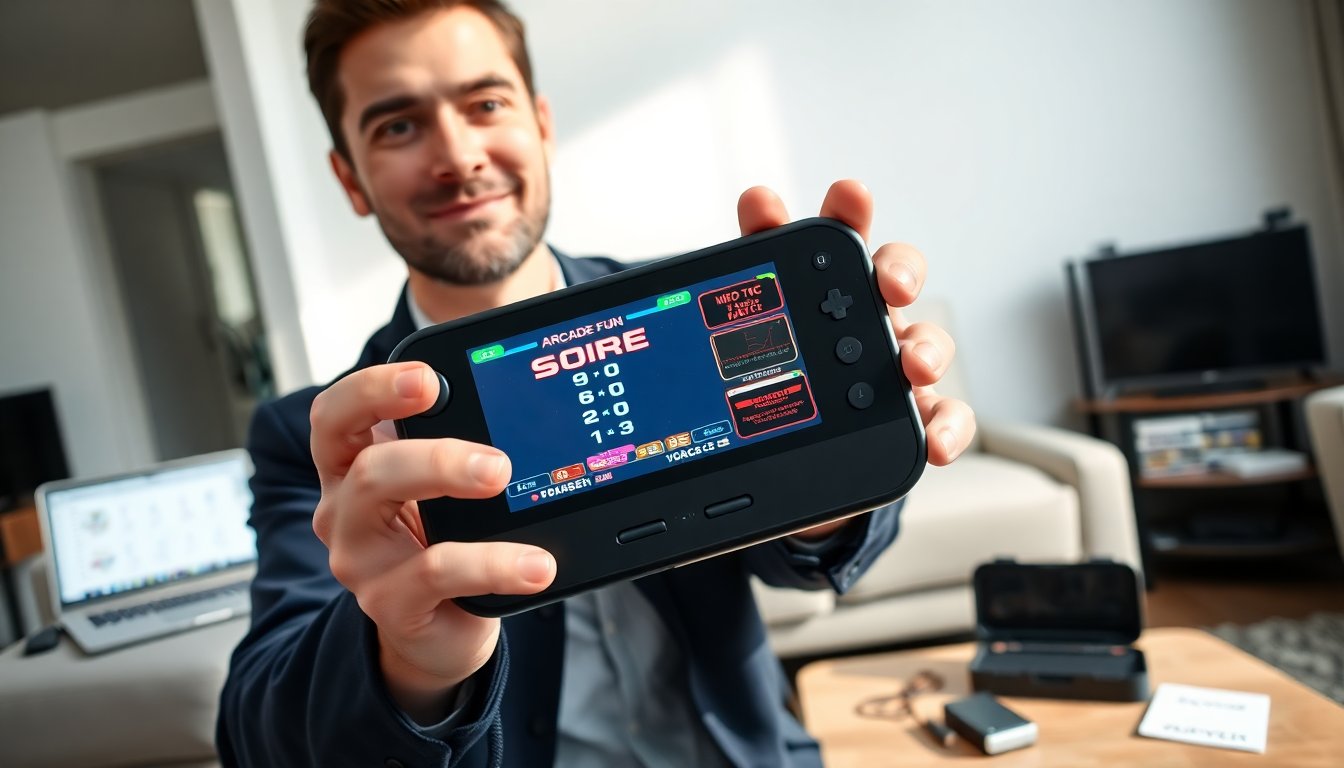

Arcade fun portable game console helps players enjoy classic and new arcade-style games anywhere. The guide explains what to check when they shop. It covers screen, controls, battery life, game library, and price. The guide helps readers pick a device that fits their play habits and budget. It avoids jargon and gives clear, direct advice for buying in 2026.
Key Takeaways
- The arcade fun portable game console should have a high-quality screen (at least 720p or OLED) and comfortable controls to ensure clear, responsive gameplay.
- Battery life is crucial; aim for consoles offering 4 to 8 hours of play, and consider device weight if portability is a priority.
- Choose a console with a robust game library including licensed arcade titles and options for legally adding classic ROMs for maximum arcade fun.
- Consider different hardware form factors like clamshell, candy-bar, or hybrid designs based on your playstyle and portability needs.
- Accessories such as carrying cases, USB-C fast chargers, and external controllers enhance comfort and gaming experience on portable arcade consoles.
- Maintain your device by updating firmware regularly, cleaning controls, and managing settings like brightness and Wi-Fi to optimize performance and battery life.
What To Look For In A Portable Arcade Console
Screen size and quality matter. Players prefer screens that show fast action clearly. They should choose a screen with at least 720p or OLED for deeper blacks and bright colors. Controls matter more than raw specs. Players should check button layout, stick feel, and input lag. They should test physical buttons or read reviews that measure lag.
Battery life affects play sessions. Buyers should look for devices that last four to eight hours in arcade-style play. They should note that higher brightness and Wi‑Fi reduce runtime. Portability depends on weight and size. Players who travel daily should choose lighter units near 300–500 grams. Collectors who want handheld comfort can accept larger, heavier models.
Game library defines value. Buyers should verify if a console supports official stores, emulation, or both. They should prefer consoles that list licensed arcade titles and let users add their own legally obtained ROMs if they want classic collections. Storage and expandability matter. The device should offer microSD slots or large internal storage for dozens of arcade games.
Price and warranty influence decisions. Shoppers should compare feature sets across price tiers. They should check warranty length and support options. Value often comes from balanced hardware and software rather than the highest spec alone.
Top Hardware Options And Form Factors
Clamshell designs offer screen protection and compact travel. They usually pair twin screens or a single folding display. Players who prefer traditional arcade layouts often choose candy-bar handhelds. These units put buttons and sticks on a single face and feel familiar to arcade players.
Compact retro handhelds replicate arcade cabinets in small shells. They often include dedicated arcade buttons and a D‑pad. These models suit players who want authentic arcade controls. Micro handhelds target quick play and low cost. They fit a pocket but limit battery and screen size.
Hybrid consoles add detachable controllers. They let players dock a screen and attach larger controllers for home play. These systems suit players who want one device for travel and TV play. Portable modular designs let users swap parts. Players can change joysticks, buttons, or battery packs to extend life and comfort.
Processor choice affects emulation and native games. Quad-core ARM chips handle many 2D arcade titles smoothly. Devices that run modern 3D arcade ports need stronger SoCs or mobile GPUs. Cooling and thermal design affect sustained framerate. Buyers should check reviews that measure frame drops during long sessions.
Build quality and materials affect durability. Metal shells often last longer than plastic. Rubber grips improve comfort on long runs. Buyers should balance durable build and weight for daily use.
How To Get The Most Arcade Fun: Games, Accessories, And Tips
Game selection starts with preferences. Players who like short sessions should pick score‑attack arcade games. They should seek titles that save progress and leaderboards. Players who chase collections should buy consoles with large libraries or easy methods to add legal game files.
Accessories improve comfort and play. Players should buy carrying cases that fit the chosen form factor. They should add a USB‑C fast charger for quick top-ups. External controllers or mini arcade sticks provide better feel for long sessions. Screen protectors reduce glare and scratches on glossy displays.
Settings tune performance. Players should lower brightness to extend battery life. They should turn off Wi‑Fi during local play to save power. They should enable frame smoothing or vertical sync if a game shows tearing. For emulated arcade titles, players should pick correct aspect ratio and disable post‑processing to match original look.
Maintenance keeps devices working. Players should update firmware from official sources to fix bugs and add features. They should clean buttons with compressed air and mild isopropyl if grime appears. They should avoid extreme temperatures and direct sunlight while charging.
Social and cloud features add value. Players should link accounts to save progress to cloud services when available. They should join online leaderboards or local multiplayer to extend replay value. Finally, buyers should read user reviews and watch hands‑on videos before purchase to confirm that the device delivers the arcade fun they expect.