

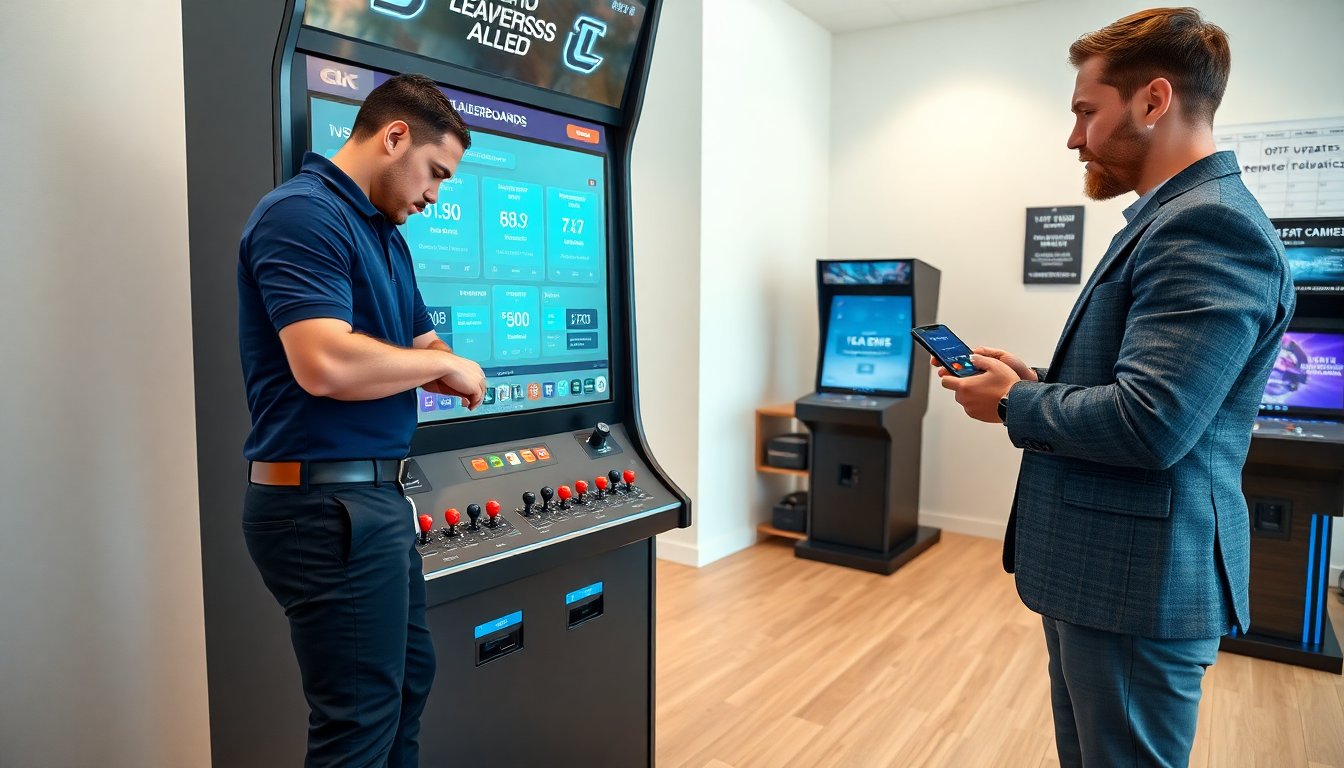

Smart arcade gaming systems combine hardware, software, and connectivity to deliver a modern play experience. They offer online leaderboards, remote updates, and adaptive controls. They also save time for operators and add value for homeowners. This guide explains what makes a system smart, how to choose one, and how to set it up for lasting use in 2026.
Key Takeaways
- Smart arcade gaming systems enhance player engagement by offering online leaderboards, remote updates, and adaptive controls for a modern gaming experience.
- These systems reduce maintenance time and increase lifetime value by enabling remote diagnostics, firmware patches, and error reporting.
- Buyers should evaluate connectivity, payment options, content library, and control accessibility to match the system with intended home or commercial use cases.
- Price points range from entry-level models for homes to premium systems with service agreements for high‑traffic arcades, allowing buyers to select based on budget and scale.
- Integration with third-party services like tournament platforms and loyalty programs improves player discovery and reduces manual work.
- Proper setup includes stable network connection, player profile creation, and adherence to safety codes to ensure reliable and compliant smart arcade gaming system operation.
What Makes An Arcade System “Smart” And Why It Matters
Smart arcade gaming systems include sensors, networking, and intelligent software. They collect play data and send updates. They let owners change games and settings remotely. They link to payment services and cloud leaderboards. They also support analytics for revenue and player behavior.
A smart system connects locally or over the internet. It accepts card, app, or contactless payment. It logs sessions and uptime. It reports errors and offers remote diagnostics. It reduces on-site service visits and speeds repairs.
Smart systems adapt controls and difficulty. They let operators push firmware patches and new features. They also let players access profiles and saved progress. They create repeat visits and longer play sessions.
Smart hardware matters for operators and homeowners. It lowers maintenance time for operators. It increases lifetime value for owners. It also keeps content fresh for players. It boosts engagement and revenue without constant physical swaps of cabinets.
Smart arcade gaming systems vary by openness and ecosystem. Some run closed platforms with curated stores. Others run open OS builds that accept third-party titles. Some emphasize social features. Some focus on tournament and multi-cabinet play. Buyers should match the system capability to the intended use case.
Choosing The Right System: Features, Use Cases, And Price Points
A buyer should list core needs before comparing systems. A buyer should note location, budget, and scale. A buyer should decide between home and commercial use. Home use favors compact designs and lower volume components. Commercial use favors hardened parts and easy service access.
Key features to evaluate include connectivity, payment options, content library, and update policy. Connectivity means Ethernet and Wi‑Fi and optional 5G. Payment means cashless readers and mobile app tie‑ins. Content library means licensed titles and indie support. Update policy means how often the vendor releases patches and new games.
Another important factor is control layout and accessibility. A good system offers swappable buttons, modular joysticks, and accessible mounting. A good system supports accessible modes for younger players and players with limited mobility. A buyer should check component sourcing and spare part availability.
Price points fall into three bands. Entry models cost less and fit homes and small bars. Midrange systems sit in the commercial hobbyist segment and offer stronger parts and cloud services. Premium systems target high‑traffic arcades and include service agreements and extended warranties.
Buyers should weigh software licensing terms. A buyer should read whether the vendor charges recurring fees for cloud features. A buyer should check revenue share rules for monetized content. A buyer should confirm data ownership and export options for play logs and analytics.
Smart arcade gaming systems may also integrate with third‑party services. These services include tournament platforms, loyalty programs, and streaming tools. Integration reduces manual work and improves player discovery. A buyer should test integrations in a demo or trial environment before purchase.
Buyer’s Checklist And Rapid Setup Tips For Home And Commercial Installations
Buyer’s checklist
- Confirm that the system lists “smart” features like OTA updates and cloud analytics.
- Verify hardware durability ratings and parts replaceability.
- Check payment and connectivity options.
- Review software licensing and recurring costs.
- Ask about warranty length and on‑site service options.
- Inspect demo units for control feel and screen quality.
- Request export of sample analytics to confirm data access.
Rapid setup tips for home use
- Choose a firm, level surface and allow 6 inches of ventilation around vents.
- Connect to a stable home network using Ethernet where possible.
- Create a player profile before public play to test input mapping and save settings.
- Run a firmware update and confirm cloud sync.
- Secure power with a surge protector and label cables for future service.
Rapid setup tips for commercial use
- Place systems near reliable internet and separate power circuits.
- Configure cashless payments and test small transactions.
- Schedule bulk firmware updates during off hours.
- Enable remote diagnostics and set alert recipients.
- Train staff on common error codes and quick swap procedures for buttons and joysticks.
Safety and compliance checks
A facility should follow local electrical codes and ADA guidance. A facility should keep records of firmware versions and maintenance actions. A facility should set a regular cleaning routine for controls and screens to preserve parts and hygiene.
Future‑proofing steps
Buyers should favor modular designs that allow screen or board upgrades. Buyers should prefer vendors that document APIs and publish regular updates. Buyers should retain older parts for repairs and keep purchase receipts and serial numbers in a single folder.
This checklist helps buyers choose and set up smart arcade gaming systems for steady operation and growth. It keeps downtime low and player satisfaction high.