

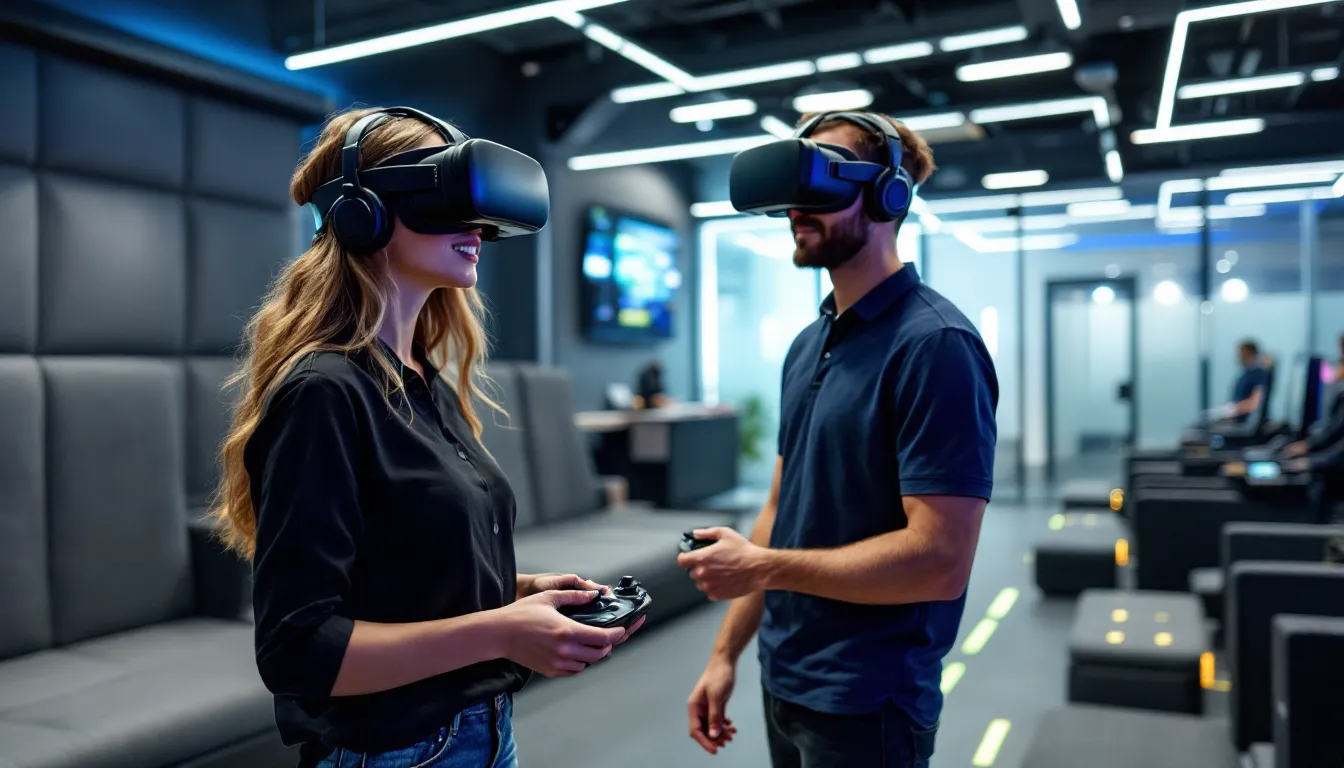

Looking for a VR gaming experience that doesn’t require dropping a grand on a headset? You’re not alone. Virtual reality arcades have exploded across the US, offering everything from free-roam zombie shooters to multiplayer racing sims, all with hardware that makes home setups look like toys.
Whether you’re planning a party, testing VR before committing to a home rig, or just need an excuse to blast aliens with friends, finding the right venue matters. Not all VR arcades are created equal. Some pack Meta Quest 2 headsets into cramped rooms, while others feature warehouse-sized play areas with Valve Index setups and haptic vests.
This guide breaks down how to locate VR gaming spots in your area, what to expect when you walk through the door, and how to tell a premium experience from a cash-grab operation. Let’s get you plugged in.
Key Takeaways
- A VR gaming experience near you hinges on three core pillars: hardware quality (headset specifications like Valve Index or Meta Quest 3), play area size (minimum 10×10 feet for room-scale VR), and content variety with proper staff expertise.
- Google Maps and specialized VR arcade directories like VRcade Finder are the fastest routes to finding nearby venues, supplemented by social media communities and recent reviews to verify current equipment and conditions.
- Dedicated VR arcades ($25-$60/hour) offer premium experiences, while entertainment centers and bowling alleys provide casual VR gaming ($15-$30 for shorter sessions) with lower-end hardware and smaller play areas.
- First-time visitors should expect 5-10 minutes of safety briefing and equipment setup, start with low-intensity games to build VR tolerance, and plan 45-60 minute sessions to avoid fatigue or motion sickness.
- VR arcades become cost-effective compared to home setups when annual play time is under 25-30 hours, eliminating the $1,000-$3,000 hardware investment and maintenance responsibilities while providing access to exclusive experiences.
- Group bookings of 4+ people typically save 15-25% and should be reserved 2-3 weeks in advance, with quality venues offering spectator screens, theme customization, and package deals for parties or team-building events.
What Makes a Great VR Gaming Experience?
A great VR gaming experience comes down to three pillars: hardware quality, content variety, and physical space. The headset matters more than most venues admit. A facility running PSVR2 or Valve Index headsets delivers sharper visuals and better tracking than budget alternatives. Resolution, field of view, and refresh rate directly impact immersion, 60Hz headsets feel sluggish compared to 120Hz+ displays.
Play area size separates good from exceptional. Free-roam experiences need at least 2,000 square feet to avoid constant boundary warnings. Stationary setups work in smaller spaces, but cramped booths kill the magic fast. Proper room-scale tracking with external base stations beats inside-out tracking for precision, especially in competitive titles.
Content library depth keeps players coming back. The best venues rotate game selections monthly and offer exclusive titles you can’t access at home. Multiplayer options matter, solo experiences are fine, but coordinated team missions or PvP shooters justify the trip. Audio quality often gets overlooked: integrated headphones with spatial audio beat tinny built-in speakers every time.
Staff expertise rounds out the package. Good operators troubleshoot tracking issues in seconds, recommend games based on skill level, and adjust settings for comfort. They also enforce hygiene protocols, disposable face covers and regular equipment sanitization should be standard, not optional.
How to Find VR Gaming Locations Near You
Search Engines and Map Tools
Google Maps remains the fastest route to nearby VR venues. Search “VR arcade near me” or “virtual reality gaming” with location services enabled. Filter results by rating (4.0+ stars minimum) and read recent reviews, outdated comments about equipment from 2023 don’t reflect current conditions. Check posted photos for facility size and hardware closeups.
Google Business listings show operating hours, pricing hints, and real-time crowd levels. Call ahead if the listing seems sketchy or lacks updated info. Apple Maps and Bing Maps work as backups, though their VR venue databases lag behind Google’s.
VR Arcade Directories and Review Sites
Specialized directories like VRcade Finder and Virtual Reality Arcade Directory catalog locations by region with detailed specs. These sites list headset models, play area dimensions, and available game libraries, data Google reviews won’t mention. Many are updated by gaming tech reviewers who evaluate hardware quality firsthand.
Yelp and TripAdvisor pull in crowd-sourced reviews, but filter for recency. A venue praised in 2024 might have changed ownership or downgraded equipment. Look for complaints about broken hardware, sticky controllers, or outdated game selections, red flags that won’t show up in marketing copy.
Social Media and Community Recommendations
Local gaming subreddits and Facebook groups deliver unfiltered takes. Post “looking for VR arcade recommendations near [city]” and you’ll get responses within hours. Discord servers focused on VR gaming often maintain pinned lists of regional venues with member ratings.
Instagram and TikTok provide visual proof of venue quality. Search hashtags like #VRArcade or #VirtualRealityGaming plus your city name. User-generated content reveals actual play spaces, equipment conditions, and crowd sizes, no marketing spin. Check venue accounts for event announcements and new game drops.
Types of VR Gaming Venues You’ll Encounter
Dedicated VR Arcades
Purpose-built VR facilities offer the premium experience. These venues invest in high-end headsets (Valve Index, HTC Vive Pro 2, or Varjo Aero for enterprise setups), dedicated play stations with 15×15-foot tracking areas, and curated game libraries. Expect booking systems, trained staff, and climate control, sweating in VR sucks.
Pricing typically ranges from $25-$60 per hour depending on location and hardware tier. Major metro areas like San Francisco and New York hit the upper range. Dedicated arcades often feature hi-tech gaming setups that include haptic feedback vests, motion platforms, and multi-sensory effects.
Entertainment Centers and Bowling Alleys
Main Event, Dave & Buster’s, and Round1 have added VR stations to their offerings. Equipment quality varies, some locations run Meta Quest 2 headsets, others feature custom rigs. Play areas tend to be smaller (10×10 feet or less) since VR competes for floor space with other attractions.
These venues work well for casual groups who want VR as part of a bigger outing. Pricing bundles VR with arcade credits and food, usually $15-$30 for 20-30 minute sessions. Don’t expect bleeding-edge hardware, but it’s convenient and kid-friendly.
VR Escape Rooms
VR escape rooms blend puzzle-solving with immersive storytelling. Teams of 2-6 players work together in virtual environments, often with physical props that mirror in-game objects. Popular franchises include The Void (Disney partnerships), Sandbox VR, and Dreamscape.
These experiences run 15-45 minutes with prices from $30-$60 per person. Hardware quality matters less here since gameplay focuses on narrative and cooperation over fast-twitch action. Book in advance, prime evening and weekend slots fill up days ahead.
Pop-Up VR Experiences and Events
Seasonal pop-ups and convention VR booths offer limited-time experiences. PAX, E3 (when it returns), and local gaming expos feature demo stations for upcoming titles. Quality spans from cutting-edge (publisher-sponsored booths with unreleased games) to mediocre (third-party vendors hawking last-gen hardware).
Malls and shopping centers occasionally host temporary VR setups during holidays. These are hit-or-miss, some deliver solid experiences with Quest 3 headsets, others push overpriced 5-minute demos on ancient Gear VR hardware. Check signage for headset model and pricing before committing.
What to Expect During Your First Visit
Booking and Pricing Models
Most dedicated arcades require online reservations through their websites or apps. Walk-ins work at entertainment centers, but expect waits during peak hours (Friday-Sunday evenings). Pricing structures break down into three models:
- Hourly rates: $30-$60 per hour per station, often with discounts for 90+ minute blocks
- Per-experience pricing: $15-$25 for specific 15-30 minute games
- Unlimited passes: $40-$80 for 2-4 hour all-access sessions
Group packages offer better value, parties of 4+ typically save 15-25% versus individual bookings. Check for first-timer discounts or weekday specials. Some venues add equipment fees ($5-$10) or require signed waivers for minors.
Safety Briefings and Equipment Setup
Staff walk you through safety basics: how to adjust the headset, where boundary warnings appear, and emergency stop procedures. They’ll measure your interpupillary distance (IPD) for optimal lens alignment, this matters more than most people realize. Poorly adjusted IPD causes eye strain and blurry visuals.
Headset fitting takes 2-3 minutes. Over-the-head straps distribute weight better than elastic bands. Controllers get wrist straps (use them, thrown controllers cost you the replacement fee). Operators sanitize equipment between sessions with UV-C light or disinfectant wipes. You can bring your own face cover if shared hygiene bothers you.
Physical space orientation comes next. Staff mark play area boundaries with floor tape or visual markers. Free-roam experiences include a brief tutorial level to acclimate you to movement mechanics. Total setup averages 5-10 minutes, eating into your paid session time at some venues (ask beforehand).
Game Selection and Session Duration
Game libraries typically offer 20-100+ titles across genres. First-timers should start with comfort-rated experiences, intense movement in VR causes motion sickness for 20-30% of new users. Staff recommend beginner-friendly options like Beat Saber, Walkabout Mini Golf, or stationary shooters.
Session duration sweet spot hits 45-60 minutes. Shorter sessions feel rushed, longer ones cause fatigue. Experienced players can push 90 minutes before discomfort sets in. Take 5-minute breaks between intense games, your brain needs time to readjust.
Some venues let you switch games mid-session, others lock you into pre-selected experiences. Clarify this when booking. Multiplayer games require coordinated bookings if you’re coming with friends, reserve adjacent stations at the same time slot.
Top VR Games and Experiences Available at Arcades
Multiplayer Shooters and Battle Royale
Population: One dominates VR battle royale with climbing mechanics and 18-player matches. Arcades running this title need robust network setups, latency kills the experience. Contractors and Pavlov VR deliver Counter-Strike-style tactical gameplay with 5v5 team modes. Expect 10-20 minute rounds.
Arizona Sunshine and After the Fall offer co-op zombie survival for 2-4 players. These work well for mixed-skill groups since difficulty scales. Arcade-exclusive titles like Zero Latency’s Singularity and Sandbox VR’s Deadwood Mansion feature custom hardware integration with haptic vests and motion tracking beyond consumer headsets.
Cooperative Adventure and Puzzle Games
Keep Talking and Nobody Explodes shines in VR arcades, one player defuses bombs in the headset while teammates read the manual outside VR. It’s chaotic and hilarious. Sairento VR brings ninja combat with wall-running and bullet-time mechanics, accommodating solo or co-op play.
The Room VR: A Dark Matter delivers intricate puzzle-solving without motion sickness risk. Sessions run 60-90 minutes with high replay value for puzzle enthusiasts. Moss and Moss: Book II offer charming third-person adventures that work great for younger players or VR newcomers hesitant about first-person perspectives.
Racing and Sports Simulations
Racing sims justify the arcade trip. Project Cars 3, Assetto Corsa Competizione, and iRacing paired with full motion rigs and force-feedback wheels create experiences impossible to replicate at home. Gaming monitor setups can’t match the spatial awareness of VR racing, you instinctively check side mirrors and apex points.
Walkabout Mini Golf VR surprises people with its depth, 18-hole courses with realistic physics and multiplayer support. Eleven Table Tennis replicates ping-pong with scary accuracy. Sports sims work well for older players or those avoiding intense movement.
Horror and Thriller Experiences
Five Nights at Freddy’s VR: Help Wanted and Resident Evil 4 VR deliver jump scares that hit different in VR. Not recommended for first sessions, motion sickness plus fear compounds badly. The Exorcist: Legion VR offers episodic horror with 20-minute chapters, perfect for arcade formats.
Affected: The Manor focuses on atmospheric dread over action. These experiences work best solo with good headphones, spatial audio makes or breaks horror VR. Some venues offer “horror nights” with reduced lighting and themed decorations. Check age restrictions: many arcades rate these titles 16+ or 18+.
Key Factors to Consider When Choosing a VR Venue
Hardware Quality and Technology
Headset specs determine your experience ceiling. Meta Quest 3 (2064×2208 per eye, 120Hz) represents the baseline for decent standalone experiences in 2026. Tethered setups with Valve Index (1440×1600 per eye, 144Hz) or HTC Vive Pro 2 (2448×2448 per eye, 120Hz) deliver superior visuals and tracking.
Tracking method matters. External Lighthouse base stations (used by Valve Index and HTC Vive systems) provide sub-millimeter precision across large play areas. Inside-out tracking on Quest headsets works fine for most games but struggles in low-light conditions or with fast movements. Ask what headset model the venue runs, if they dodge the question, that’s a red flag.
Controller quality varies wildly. Valve Index Knuckles controllers track individual finger movements, adding immersion absent in standard button-based controllers. Check for stick drift or unresponsive buttons during setup, don’t accept faulty equipment.
Space and Play Area Size
Minimum viable play area measures 6.5×6.5 feet for stationary experiences. Room-scale VR needs 10×10 feet minimum, preferably 15×15 feet or larger. Free-roam experiences like those at Zero Latency facilities span 2,000+ square feet with physical obstacles and team coordination.
Ceiling height matters for games requiring overhead actions, Beat Saber and Gorn need 8-foot ceilings minimum. Watch for ceiling fans, exposed pipes, or low-hanging fixtures. Venues with padded walls show they’ve thought about player safety.
Floor surface impacts comfort. Padded flooring or thick carpet beats concrete during hour-long sessions. Some premium venues use motion tracking floors that provide haptic feedback through vibration modules.
Hygiene and Maintenance Standards
Visible cleaning protocols separate professional operations from sketchy ones. Quality venues sanitize equipment between every session using hospital-grade disinfectants or UV-C sanitizing boxes. Disposable face covers (VR Cover brand or similar) should be standard, decline to play if they’re not offered.
Controller condition reveals maintenance standards. Worn-out thumb sticks, sticky buttons, or cracked housing indicate neglect. Lenses should be scratch-free with no visible smudges. Headset straps should adjust smoothly without fraying or broken clips.
Smell test: VR headsets used by hundreds of sweaty gamers develop funk fast. If equipment smells even though “sanitization,” management isn’t doing their job. Premium venues replace foam padding every 3-6 months and maintain spare equipment sets to avoid rushing turnover.
Tips for Getting the Most Out of Your VR Gaming Session
Dress appropriately. Skip heavy jackets and jewelry that snags controllers. Tie back long hair, it gets caught in headset straps. Wear contact lenses instead of glasses if possible: most headsets accommodate eyewear but fog up glasses within minutes.
Arrive 15 minutes early for first visits. Waiver signing, payment processing, and equipment orientation eat time. Some venues deduct setup from your paid session, others don’t, clarify beforehand.
Start with low-intensity games to build VR tolerance. Teleport movement causes less nausea than smooth locomotion. If you feel queasy, stop immediately. Pushing through motion sickness makes it worse and ruins the session. Take breaks every 20-30 minutes to reset.
Communicate with staff about your experience level and game preferences. They know which titles work best for beginners versus VR veterans. Don’t be afraid to switch games mid-session if something isn’t clicking, you’re paying for your time.
Hydrate before playing. VR dehydration sneaks up fast, especially in rhythm games or shooters with constant movement. Most venues allow water bottles in designated areas. Avoid heavy meals 90 minutes before playing, VR motion plus a full stomach equals regret.
Use comfort settings. Many games offer field-of-view restrictions, snap turning instead of smooth rotation, and variable locomotion speeds. These “training wheels” help newcomers. Disable them gradually as you acclimate.
Clear your calendar post-session. VR fatigue hits differently than screen gaming. First-timers often need 30-60 minutes to readjust to reality, especially after intense experiences. Don’t schedule a VR session right before important meetings or driving long distances.
VR Gaming for Groups, Parties, and Events
VR arcades crush traditional party venues for memorable gaming moments. Birthday packages typically include 2-3 hours of play, reserved party space, and group discounts starting at 4+ people. Pricing runs $150-$500 depending on group size and venue tier.
Team-building events work surprisingly well in VR. Escape room experiences and cooperative missions force communication and problem-solving. Corporate groups of 10-30+ can book entire facilities for private sessions. Many venues offer catering options or partner with nearby restaurants.
Bachelor/bachelorette parties trend toward VR horror experiences or competitive shooters with tournament brackets. Request game ratings beforehand, some venues restrict mature content for large groups. BYOB policies vary: dedicated arcades rarely allow alcohol, entertainment centers sometimes do.
Age considerations matter for mixed groups. Most venues set minimum ages at 6-8 years old, with height requirements for proper headset fit. Content ratings (E for Everyone, T for Teen, M for Mature) apply same as traditional games. Supervising adults don’t need to play, many venues provide spectator screens showing players’ in-game views.
Booking lead time for groups: 2-3 weeks minimum for parties of 6-12, 4-6 weeks for larger events. Prime weekend slots book fast, especially during holiday seasons. Ask about package customization, some venues bundle arcade credits, food vouchers, or branded swag.
Spectator experience shouldn’t be ignored. Quality venues provide screens mirroring each player’s view so non-participants stay engaged. Some locations feature VR gaming content lounges with traditional gaming consoles for downtime between VR sessions.
Cost Comparison: VR Arcades vs. Home VR Setup
Home VR entry costs in 2026:
- Meta Quest 3: $499 (128GB), $649 (512GB) standalone headset
- PlayStation VR2: $549 + $499 PS5 console = $1,048 minimum
- Valve Index: $999 full kit + gaming PC ($1,200-$2,000) = $2,200-$3,000 total
Add controller replacements ($50-$150 each), games ($10-$60 per title), and accessories (face cushions, cable management, wall mounts) for another $200-$400 first year. Space requirements at home: 6.5×6.5 feet minimum, more for room-scale.
VR arcade math for casual users:
- Average session: $40-$50 for 60 minutes, twice monthly
- Annual cost: ~$960-$1,200
Arcades make sense if you play VR less than 2-3 hours monthly. You skip hardware obsolescence, headset tech cycles every 2-3 years. No troubleshooting driver updates, no managing game libraries, no dedicating home space.
Crossover point hits at ~25-30 hours of annual play. Heavy users (weekly sessions or more) should invest in home setups. Meta Quest 3 offers the best value for standalone experiences. Serious sim racing or PCVR enthusiasts justify Index or Vive Pro 2 setups.
Hidden arcade advantages: Access to exclusive experiences (full-body tracking, haptic suits, motion platforms), no equipment maintenance, instant access to new releases, and social atmosphere. Home VR isolates you: arcade VR connects you with other players physically and virtually.
Hidden home setup advantages: Play anytime, mod support on PC, custom content, no time pressure, and better comfort (your own sanitized equipment). Privacy matters for social VR applications, most people prefer not using VRChat in public venues.
Conclusion
VR gaming experiences near you range from budget-friendly entertainment center add-ons to premium dedicated facilities with cutting-edge hardware. The right choice depends on your priorities: casual fun with friends versus serious sim racing, spontaneous drop-ins versus planned events, variety-seeking versus mastering specific titles.
Start by searching Google Maps and checking specialized directories for nearby options. Read recent reviews, verify headset models, and call ahead about pricing structures. Book your first session for 45-60 minutes during off-peak hours to test the waters without crowds or time pressure.
VR arcades fill a unique niche, they’re not replacements for home setups, but they’re not obsolete novelties either. They provide access to experiences that cost thousands to replicate at home, with zero maintenance headaches. For many gamers, that trade-off beats owning equipment that collects dust between sessions.
Get out there and try a few venues. Your perfect VR spot exists, you just need to find it.