

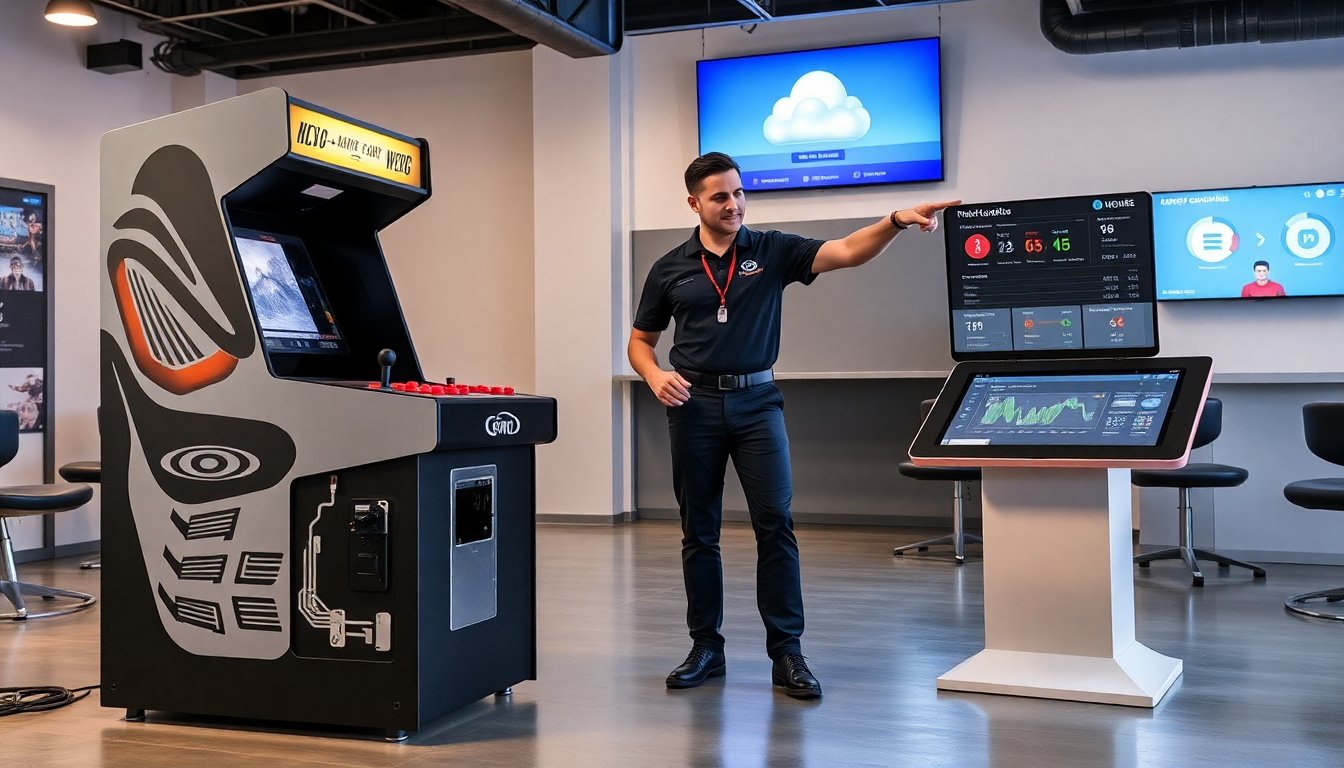

Arcade machine technology trends shape how players interact with games in 2026. The industry moves fast and companies update hardware and software. Designers add cloud access, AI features, and new payment options. Operators test touchless controls and data tools. The article lists key technology trends and shows how they change play and business choices.
Key Takeaways
- Arcade machine technology trends embrace hybrid hardware with modular, cloud-ready designs that extend machine life and simplify updates.
- Cloud gaming and AI integration enhance gameplay by adjusting difficulty, matching players fairly, and enabling cross-platform progress.
- Touchless controls and contactless payments improve user experience while supporting hygiene and flexible billing models.
- Data analytics empower operators to optimize game selections, floor layouts, and staffing for increased revenue.
- New business models include digital content sales, subscriptions, and targeted promotions to diversify income streams.
- Venue designs evolve to include social spaces and streaming areas, boosting player engagement and visit duration.
Hybrid Hardware Designs: From Cabinet Classics To Modular, Cloud-Ready Systems
Manufacturers produce hybrid cabinets that combine classic controls with modern modules. They keep joysticks and buttons while adding swappable screens, haptic panels, and network cards. This approach lets operators update games without replacing full cabinets. It also extends machine life and reduces waste.
Design teams build modular frames for maintenance. They put power supplies, GPUs, and storage on easily removable sleds. Technicians swap a sled in minutes. That lowers downtime and service cost.
Arcade machine technology trends push cloud-ready designs. Cabinets include ethernet and Wi‑Fi options. They stream game assets from servers and run thin clients. Cloud streaming reduces local hardware needs and makes high-end visuals accessible.
Some vendors include local GPUs plus cloud fallback. That setup gives low latency for local play and scalable demand during peak hours. Operators balance cost by mixing machines with full rigs and thin clients.
Manufacturers adopt standard ports and mounting points. Operators mix control panels for fighting games, racing rigs, or rhythm pads on the same chassis. That reduces inventory and simplifies floor planning.
They add energy-efficient components. Low-power CPUs and variable-brightness LEDs cut power use. Many cities tighten energy rules, and operators save on electricity bills.
Arcade machine technology trends also affect mobility. Compact, tablet-sized cabinet modules let venues run pop-up arcades. Mobile units link to venue Wi‑Fi and cloud libraries. They offer quick setup and flexible placement for events and promotions.
Software Evolution: Cloud Gaming, AI-Powered Gameplay, And Cross-Platform Ecosystems
Developers shift software to support cloud gaming and local rendering. They write code that runs on servers and on cabinet hardware. This split architecture lets players access large libraries and keeps latency low.
Arcade machine technology trends include AI use in gameplay. Developers add AI that adapts difficulty to player skill. The AI adjusts timing, enemy behavior, and scoring in real time. That keeps games tight and players engaged.
AI also helps match players for local tournaments. The system rates skill and pairs similar players. That produces fair matches and better player retention.
Cross-platform ecosystems let players keep progress across arcade, console, and mobile. Players log into a profile and load saved data. Operators link leaderboards and achievements to the central service.
Cloud updates let operators push patches and new content remotely. They add seasonal modes, tournament rules, and cosmetic packs without a service visit. Remote telemetry reports errors and usage so staff can plan repairs and promotions.
Security receives focused attention. Developers encrypt streams and authenticate clients to prevent fraud. They separate payment systems from gameplay code and use tokenized transactions to protect card data.
Open APIs let independent developers and venue partners add modes and tournaments. Operators run third-party events and monetize new content. That expands the software ecosystem and provides niche experiences for local audiences.
Arcade machine technology trends also include analytics tools in software. Developers build dashboards that show play time, revenue by title, and peak hours. Operators use those metrics to place machines, schedule staff, and choose game mixes.
User Experience & Business Models: Touchless Interaction, Data-Driven Operations, And New Revenue Streams
Operators add touchless controls to improve hygiene and access. They install motion tracking, gesture sensors, and smartphone pairing. Players point or wave to navigate menus. They also scan QR codes to link profiles and make payments.
Arcade machine technology trends favor contactless payments. Venues accept mobile wallets, NFC cards, and in-app tokens. Operators use session-based billing and time-play options. They price short sessions, tournaments, and premium events.
Data drives decisions. Operators gather anonymized play data and sales metrics. They analyze which titles attract repeat visits and how long players stay. They then adjust floor layouts and game lineups to boost revenue.
New revenue streams appear through digital content. Operators sell cosmetic packs, event entry fees, and streaming access to tournaments. They partner with brands for sponsored modes and limited-time events. That diversifies income beyond quarters and tokens.
Subscription models emerge for dedicated players. Venues offer monthly passes that include priority access, discounted tokens, and member-only tournaments. Subscriptions create steady income and build community.
Operators use targeted promotions. They run off-peak discounts and weekday bundles to level traffic. They send push messages to members with personalized offers based on play history.
Staff roles evolve. Staff move from coin collection to event management and tech support. Operators train staff to handle network issues, run tournaments, and manage online leaderboards.
Arcade machine technology trends also affect venue design. Operators add streaming areas, social photo spots, and spectator seating. They aim to create shareable moments and to increase dwell time, which raises per-visit spending.