

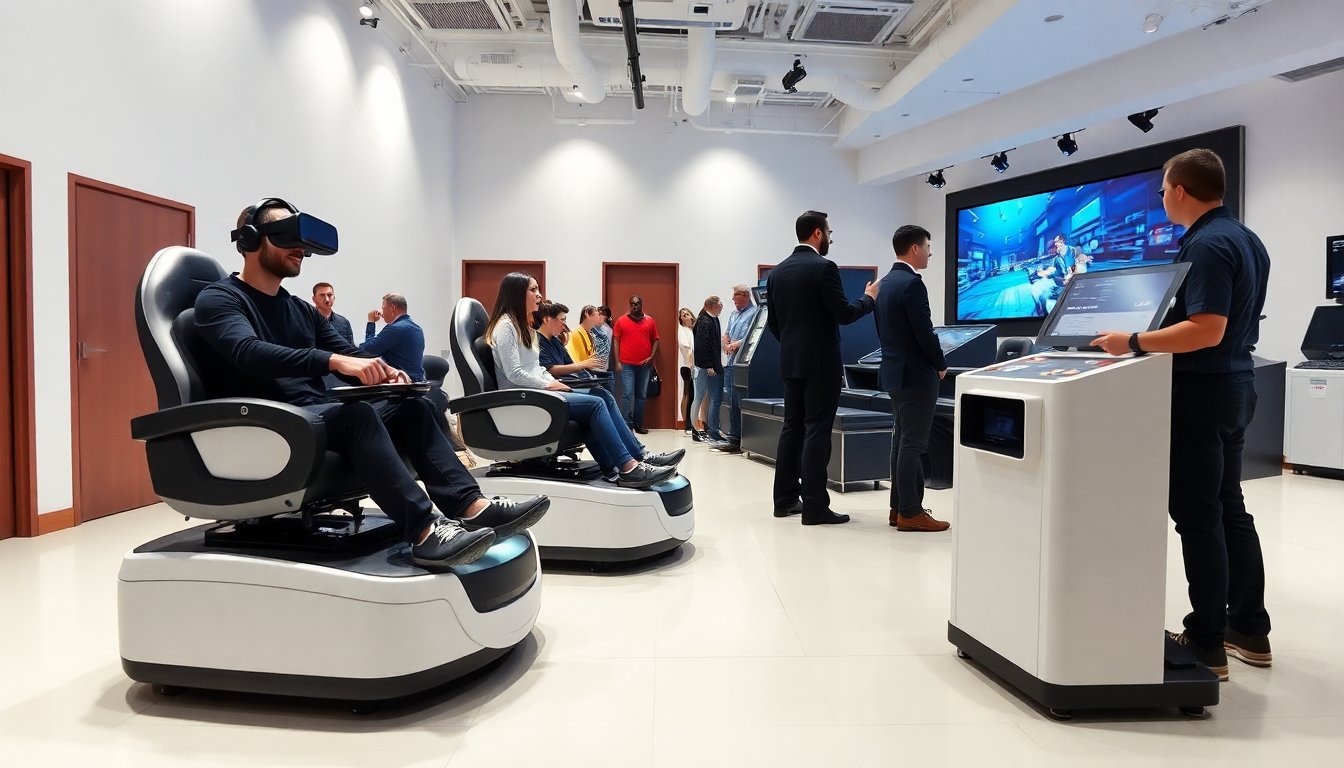

Immersive arcade gaming tech sits at the start of a new play era. It blends precise motion systems, strong haptics, spatial audio, AR/VR and smart software to create physical and digital fusion. Developers build hardware and design spaces to pull players into focused, social sessions. This article explains what defines the field today and how technologies and design choices create memorable arcade experiences.
Key Takeaways
- Immersive arcade gaming tech combines precise motion, haptics, spatial audio, AR/VR, and AI to create engaging physical and digital gaming experiences.
- Designers focus on short, repeatable play loops of about five minutes with clear goals and visible rewards to maximize player engagement and retention.
- Motion platforms, haptics, and spatial audio work together to enhance realism and player presence, reducing motion sickness and visual clutter.
- AR and VR enable scalable mixed reality experiences that support both solo and group play, enhancing social interaction in arcade settings.
- Operators implement modular hardware and AI-driven maintenance tools to minimize downtime and keep immersive arcade gaming tech reliable and profitable.
- Thoughtful space design and monetization models encourage longer visits, social interaction, and repeat play, boosting operator revenue and player satisfaction.
What Defines Immersive Arcade Tech Today
Immersive arcade gaming tech means hardware and design that make play feel immediate and shared. The phrase ties physical movement to clear sensory feedback. Operators place machines in social layouts to encourage competition and cooperation. Developers use fast sensors, low-latency networks, and visible actuators to link a player’s action to instant response.
Immersive arcade gaming tech today favors short, repeatable loops. Designers focus on five-minute plays that create strong first impressions. The designs include clear goals, rising intensity, and visible rewards. The hardware feels solid and precise. Seats lock and release smoothly. Controllers snap into place with little fuss. Screens respond without blur. These details keep attention high and reduce motion sickness.
The term also covers shared mixed reality experiences. Operators pair floor projection, AR overlays, and room-scale VR so groups can watch and join. The business model favors players who return for new challenges. That model rewards immersive arcade gaming tech that stays reliable and easy to operate. Maintenance and clear diagnostics become part of product design. A machine that signals errors and guides a staff member to fix them keeps the location open and profitable.
Key Technologies Powering Immersion (Motion, Haptics, Spatial Audio, AR/VR, and AI)
Motion platforms move players in time with game events. Designers place actuators under seats and floors. The platforms tilt, shake, and elevate to match in-game motion. Players feel acceleration and turns. The system keeps latency below 50 ms to avoid mismatch. Motion brings the first layer of realism to immersive arcade gaming tech.
Haptics add touch feedback. Developers use localized actuators in seats, controllers, and wearable bands. The hardware sends pulses, rumbles, and fine vibrations to signal hits, engine hum, or texture. Haptics help the player map sound and sight to touch. That mapping increases presence and action clarity.
Spatial audio places sound sources around the player. The system tracks head position and speakers or headphones adjust in real time. Sound cues tell the player where threats or goals appear. Spatial audio reduces the need for visual clutter and helps groups share the same audio space.
AR and VR provide visual depth and scale. VR headsets offer full immersion for solo or small-group cabins. AR overlays add virtual objects to a physical stage so spectators can see mixed content. Both approaches let designers scale visual fidelity and social visibility depending on location size and budget.
AI improves content and operations. Game AI adapts difficulty to player skill and session length. Backend AI predicts peak hours and suggests staffing levels. Computer vision tracks player posture and flags unsafe moves. AI also automates voice and chat systems to guide players and speed onboarding. These systems tighten the loop between player input and system response, which helps immersive arcade gaming tech feel alive and smart.
Designing Memorable Arcade Experiences: Interaction, Space, And Monetization Models
Designers pick interaction models that match the hardware and the crowd. Simple tasks work well on motion rigs. Fast reflex challenges suit haptics and short loops. Social puzzles fit room-scale AR. Good designers map tasks to hardware so play feels clear and fun.
Space planning influences flow. Operators place machines to reduce collisions and to keep queues visible. The layout uses sight lines so staff can watch multiple games. Designers add rest areas and spectator zones to extend visits. These choices make people stay longer and spend more.
Ticketing and session models shape monetization. Operators sell time-based sessions, per-play credits, and tiered membership. A venue can sell peak-hour passes and off-peak bundles. Immersive arcade gaming tech supports these models by offering short, repeatable plays and by capturing metrics tied to session length and return visits.
In-game economy design matters. Games give immediate rewards like digital trophies and physical tickets. They offer progression that encourages repeat play. Operators tie rewards to on-site purchases and to mobile accounts for cross-location loyalty.
Staff and maintenance reduce downtime. Operators train staff to swap modules and clear jams quickly. Designers build modular components so teams can replace a panel in minutes. Clear diagnostics send a fault code and a short repair guide to a mobile app. These steps keep machines on and revenue flowing.
Accessibility and safety expand the audience. Designers provide adjustable seats, simple control modes, and clear warnings for motion intensity. Safety features include emergency stop buttons and auto-calibration before play. These measures help venues host more players and avoid incidents.
Immersive arcade gaming tech succeeds when hardware, software, and space work together. The design must make actions clear and rewards immediate. The venue must support fast turnover and repeat visits. This coordinated approach creates the memorable sessions that bring players back and keep operators profitable.