

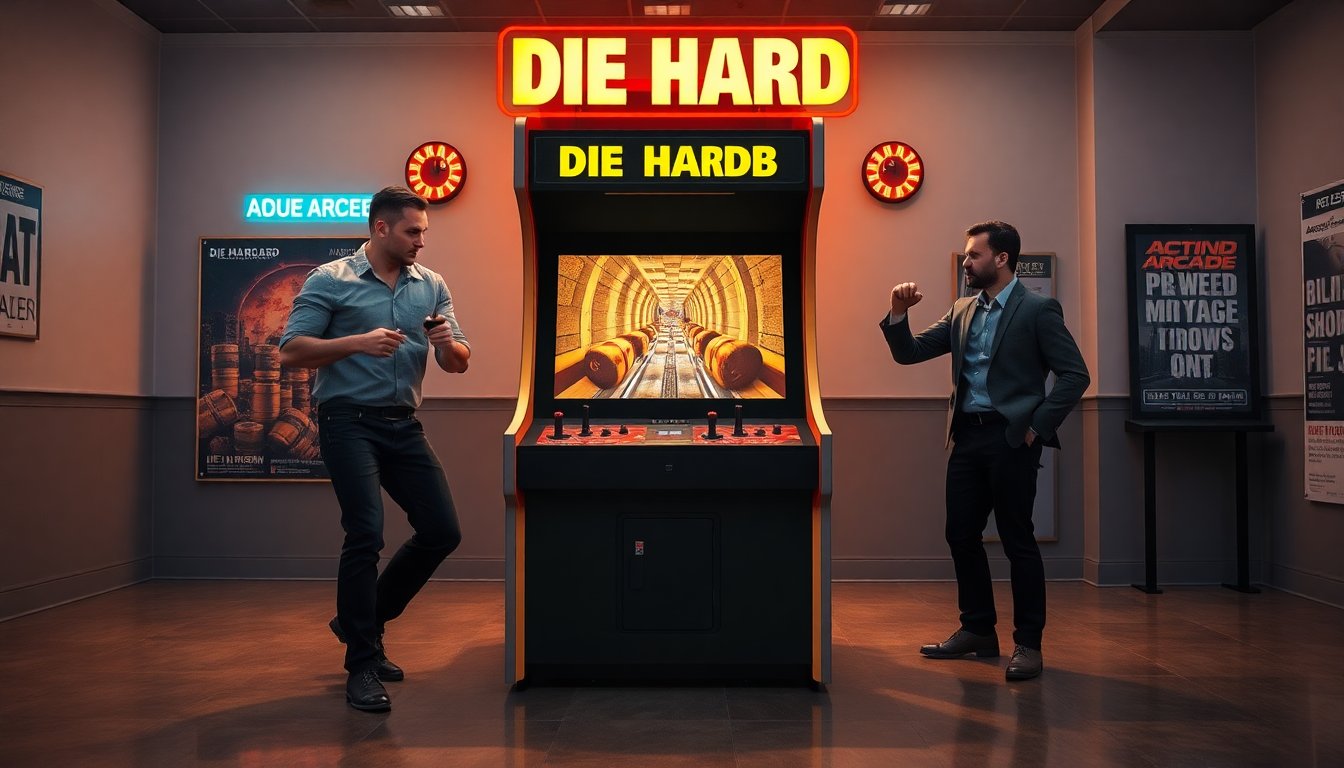

Die Hard Arcade released in 1996 as a loud, fast arcade beat ’em up. The game uses 3D graphics and on-rails movement. It mixes hand-to-hand combat with interactive set pieces. Fans praise its pace and showy moments. Sega developed the game to bring action-movie energy to arcades. This article explains the origins, gameplay, and where players can try Die Hard Arcade today.
Key Takeaways
- Die Hard Arcade, released by Sega in 1996, revolutionized arcade beat ’em ups with its fast pace, 3D graphics, and cinematic action movie vibe.
- Players control John McClane and partner Alan to rescue hostages through destructible environments, using simple but impactful combat moves like light attacks, heavy attacks, throws, and grabs.
- The game features interactive elements like breakable objects and environmental hazards that add strategic depth to fights and emphasize timing and positioning.
- Die Hard Arcade’s legacy continues with ports on Sega Saturn and availability through retro collections and emulation, making it accessible for both new and returning players.
- To succeed in Die Hard Arcade, players should master core moves, use throws for crowd control, watch boss patterns, and leverage environmental weapons and health pickups effectively.
- For the authentic arcade experience, players are encouraged to try local retro arcade cabinets or seek the Sega Saturn port for home play.
What Is Die Hard Arcade? Origins, Story, And Development Highlights
Die Hard Arcade began as an arcade project by Sega AM1. The team aimed to create a game with cinematic action. They based parts of the design on popular action films. The title uses the die hard arcade name to signal movie-style thrills. The story follows officer John McClane and a partner named Alan as they rescue hostages from a skyscraper. The plot borrows familiar beats: a terrorist plot, timed escapes, and destructible environments. The developers chose a bright, exaggerated aesthetic. They wanted players to feel powerful during fights. The hardware of the time allowed large sprites and 3D backgrounds. Sega released Die Hard Arcade in Japanese and international arcades in 1996. The arcade cabinet featured dual joysticks and punch/throw buttons. Sega later adapted the game for home consoles with added scenes and voice work. Critics noted the game for its showy set pieces and quick pace. Players often remember the transforming elevators, collapsing floors, and enemy hordes. The game introduced early interactive objects such as exploding barrels and breakable glass. Those elements helped the title stand out among side-scrolling fighters. The sound design emphasizes impact with loud hits and energetic music. The development team kept controls simple to suit arcade audiences. They balanced fast action with moments that reward timing. Die Hard Arcade remains a clear example of Sega’s arcade-era ambition.
Gameplay, Characters, Enemies, And Core Mechanics Explained
Die Hard Arcade uses a corridor-based layout with free movement along a plane. The player moves forward through stages while enemies appear from both sides. Combat uses simple commands: light attack, heavy attack, and throw. The game places emphasis on grabs and cinematic finishers. The title offers two main characters: John McClane and his partner Alan. Each character uses similar moves with minor speed or strength differences. Enemies range from basic thugs to armored foes and large minibosses. The game adds variety with enemy weapons such as knives and pistols. Players can disarm foes and use found weapons. Environmental hazards alter fights and force quick decisions. The die hard arcade name fits the game because many encounters require endurance and fallback tactics. Health pickups appear after fights and inside destructible objects. The combo system rewards button timing rather than long chains. The throw and grapple mechanics allow the player to slam enemies into scenery. The game includes boss fights that test pattern recognition and positioning. The camera shifts to highlight set pieces during dramatic moments. The control scheme keeps the arcade feel by prioritizing immediacy over deep combos. The pacing drives players to keep moving and to use space as a resource. Cooperative play allows two players to coordinate grabs and clears. The difficulty scales at later stages with more enemies and tighter timing windows. The game balances spectacle and challenge with short, intense segments.
Legacy, Ports, Where To Play Today, And Tips For New Players
Die Hard Arcade left a mark on arcade beat ’em ups and later influenced action titles. Sega ported the game to the Sega Saturn with extra content and improved audio. The Saturn version reached Western markets under the name Dynamite Deka in some regions and Die Hard Arcade in others. Retro collections and emulation now provide common ways to play the title. Players can find die hard arcade in official re-releases, on some console stores, and on arcade cabinet collections. Fan communities keep the game alive with guides and speedrun records. New players should learn core moves first: light attack, heavy attack, and grab. They should practice using throws to control groups. They should watch boss patterns and use the environment to gain advantage. Players should conserve health by avoiding unnecessary hits and by using pickups promptly. In two-player mode, one player should focus on crowd control while the other handles bosses. Players should learn where breakable objects hide items. They should take advantage of weapon pickups for short damage boosts. For best results, players should adjust to the arcade-style timing and accept short, repeatable runs rather than long, slow sessions. Collectors should seek the Saturn port for the closest home experience to the arcade. Arcade fans should try local retro arcades or cabinet rentals to feel the original hardware. The die hard arcade legacy remains tied to its energetic presentation and to its clear, immediate combat.