

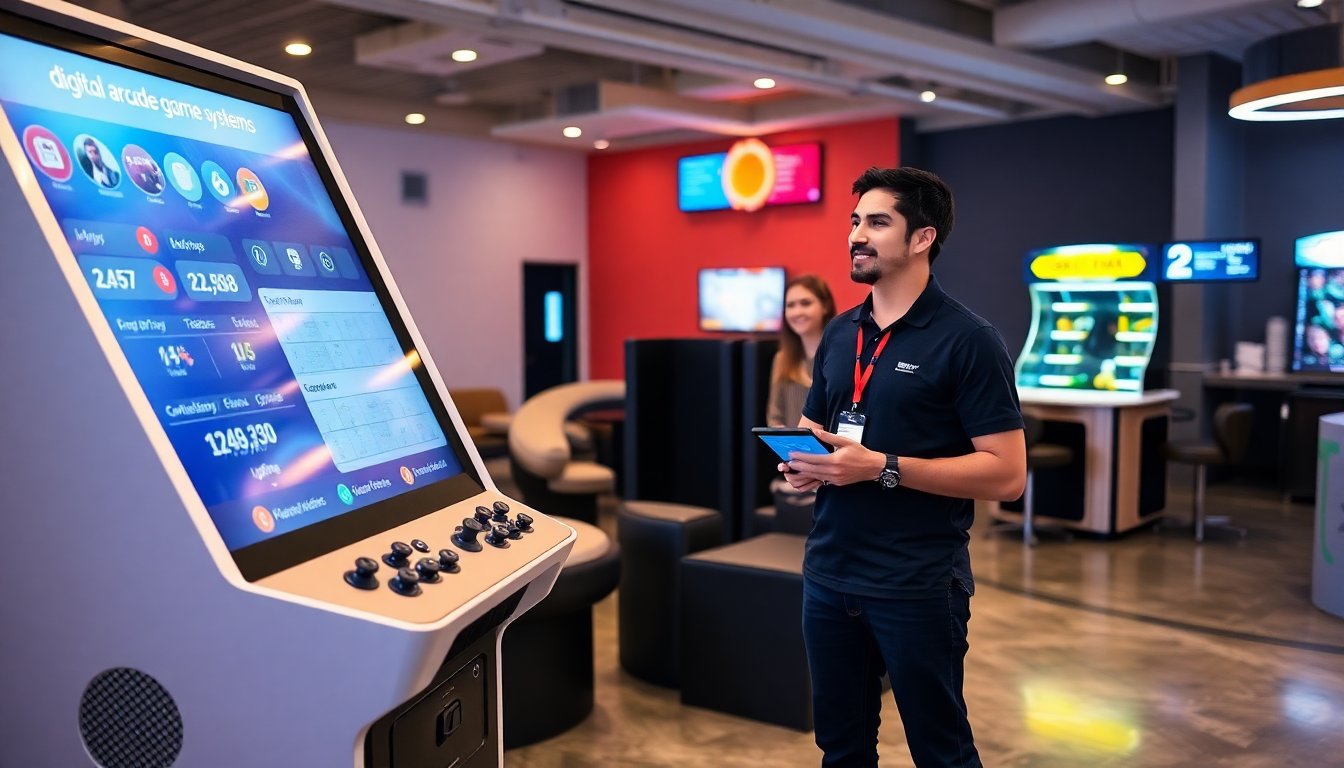

Digital arcade game systems appear in more venues and homes each year. This guide explains what digital arcade game systems do, how they work, and how operators pick and run them. It summarizes types, key features, setup steps, legal points, and ways to earn revenue. The guide uses clear language and practical steps so readers can act quickly.
Key Takeaways
- Digital arcade game systems combine hardware and software to deliver engaging arcade-style gaming experiences in venues and homes.
- Operators should choose digital arcade game systems based on game library quality, payment methods, integration capabilities, and hardware durability to fit their specific goals and environment.
- Routine maintenance and timely software updates are essential to ensure uptime, fair play, and security in digital arcade game systems.
- Compliance with local laws on payment processing, prize rules, and data privacy is critical for safely operating digital arcade game systems and avoiding legal risks.
- Monetization strategies for digital arcade game systems include pay-per-play, memberships, event rentals, tournaments, and advertising partnerships to maximize revenue.
- Tracking key performance metrics like revenue per machine and player sessions helps operators optimize game placement, pricing, and offerings for better financial results.
What Digital Arcade Game Systems Are And How They Work
Digital arcade game systems refer to electronic setups that deliver arcade-style games through hardware and software. They include a game server, input devices, display hardware, and a payment or access system. A business or homeowner installs the system, loads games, connects controllers, and configures rules for play.
Manufacturers ship prebuilt cabinets, kit components, or software packages that run on standard PCs. The software handles game menus, player profiles, leaderboards, and billing. The hardware handles player input and output. For example, a cabinet contains joysticks, buttons, speakers, and a display. A networked system sends usage data to a central server for updates and analytics.
Operators choose systems based on game libraries, update cadence, and integration options. Systems with cloud services push new games and security patches automatically. Local-only systems store games on internal drives and require manual updates. Some systems support mobile apps for player accounts. Others use physical cards or tokens to grant access.
Developers often use standard APIs and engines to build new titles. This practice lets operators expand libraries faster. Digital arcade game systems support free-play, time-based play, or pay-per-play. They also support tournaments and ticket redemption when linked to prize systems. Operators can track player sessions, revenue per game, and peak hours with built-in analytics.
Security matters. Systems must protect payment information and prevent unauthorized game copies. Modern systems include firmware signing and encrypted communications. They also include parental controls and age verification for certain titles. Operators should verify that vendors follow payment card industry standards and local privacy laws.
How To Choose The Right System: Types, Features, And Buying Considerations
Buyers should list goals before comparing vendors. Goals drive choices. Goals can include foot-traffic growth, at-home entertainment, fundraising, or competitive events. The choice between a full cabinet, a countertop unit, or a software license depends on location and budget.
Evaluate game library size and quality. A larger library gives variety, but curated selections reduce maintenance. Check game genres, multiplayer options, and licensing terms. Ask whether the vendor updates the library and who pays for new titles.
Compare payment and access methods. Systems may accept contactless pay, cash, token cards, or QR-code tickets. Choose methods that fit customer habits. For venues with quick turnover, contactless and app-based payment reduce wait time. For family venues, time-based access and party packages improve guest satisfaction.
Check integration options. Operators should confirm that the system connects to POS solutions, loyalty systems, and analytics platforms. Confirm API access if custom reporting is needed. Verify remote management features for patching and monitoring.
Assess hardware quality. Inspect cabinet build, screen type, speaker power, and controller durability. Heavy-use locations need industrial components and replaceable parts. Home setups can use consumer-grade screens and controllers to reduce cost.
Review vendor support and warranty. Understand response times, replacement policies, and firmware update schedules. Ask for references from venues that match the buyer’s profile. Check total cost of ownership, including licensing fees, support contracts, and replacement parts.
Consider local laws and venue rules. Some cities restrict gambling-style features or loot mechanics. Buyers should confirm that the system’s payout and prize features comply with local rules. Vendors that supply legal guidance reduce risk.
Balance initial cost and recurring revenue. Low-cost units may lower barriers but charge higher revenue shares. High-cost purchases may keep more revenue but need larger upfront capital. Operators should run simple break-even models to choose the best fit.
Setup, Maintenance, Legal Issues, And Practical Use Cases
Installation begins with site planning. Owners measure floor space, power requirements, and network access. They place units to avoid traffic bottlenecks and to improve sight lines for staff. They test audiovisual output and controller response during a soft launch.
Routine maintenance includes cleaning controls, updating software, and checking connections. Staff should inspect buttons and joysticks weekly. Operators should schedule firmware updates during off-hours. They should keep spare parts on hand for common failures.
Players expect uptime and fair play. Operators should set automatic reporting for system errors and session logs. They should keep a log of repairs and parts replaced. This record helps with warranty claims and insurance.
Legal issues center on payment processing, data privacy, and prize rules. Operators must use compliant payment terminals and follow card data rules. They must publish clear prize and refund policies. For ticket or prize systems, operators must confirm compliance with local amusement and gaming laws.
Insurance matters. Owners should add equipment and liability coverage. They should document serial numbers and keep receipts. Insurance helps recover costs after theft or damage.
Monetization methods vary. Venues earn from pay-per-play, time-based access, membership fees, event rentals, and advertising. Operators can sell promotional bundles or party packages. They can run tournaments with entry fees and sponsor-backed prizes. Advertisers may pay to show local promotions on game menus.
Case studies show effective use. Family entertainment centers increase dwell time with multiplayer cabinets. Bars attract drinkers with classic-game cabinets on free-play nights. Arcades create steady revenue with ticket-redemption systems that encourage repeat visits. Home users add social value and occasional rental income by hosting events.
Operators should track metrics. Useful metrics include revenue per machine, plays per day, average spend per session, and downtime. They should run simple weekly reports and adjust placement, pricing, or game mix based on data.
Security steps reduce fraud. Operators should lock cabinets, monitor with cameras, and set rate limits on play. They should update passwords and monitor transactions for anomalies. Vendors that provide audit logs make this work simpler.